
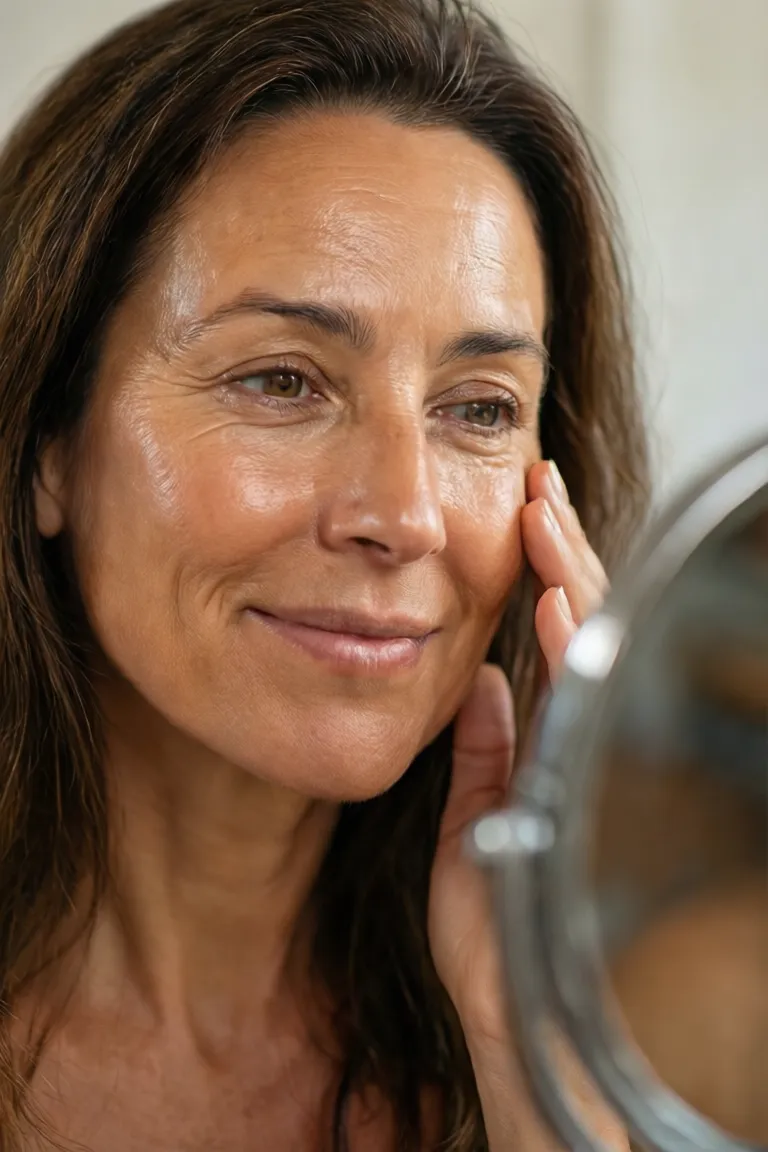
I was standing in front of the bathroom mirror, fresh from a workout, feeling strong and healthy. But the reflection staring back told a different story. My skin, especially along my jawline and neck, looked… less like me. It had a soft, relaxed drape that wasn’t there a few years ago, a subtle but undeniable loss of firmness. I felt a wave of pure frustration. I do everything right! I eat my leafy greens and lean proteins, I lift weights three times a week, I’m religious about my SPF 50. I’d earned muscle tone and energy, so why was my skin betraying me with this quiet sagging? It felt deeply unfair, like my body was changing the rules mid-game. This wasn’t about vanity; it was about a disconnect between the effort I was putting in and the reality I was seeing.
That moment was the catalyst. I’d been casually buying expensive “firming” and “lifting” creams, expecting them to restore my skin elasticity after 40 like a magic eraser. The results were so subtle I wondered if they were just clever lighting in my bathroom. I was a health-conscious woman hitting a wall, and the generic advice—“drink water, wear sunscreen”—felt like a patronizing pat on the head. I was already doing that. Something was missing from the conversation, a bridge between doing healthy things and understanding which changes could genuinely improve the appearance of aging skin. This is my journey from frustration to understanding, from chasing miracles to building a realistic, multi-layered plan.
The Morning I Realized My Healthy Routine Wasn’t Restoring Skin Elasticity After 40
That mirror moment forced me to confront a truth I’d been avoiding: healthy living isn’t a forcefield against time. I thought my good habits would armor me against the visible signs of aging, particularly lax skin. But here I was, a 47-year-old woman who exercised and wore sunscreen, still seeing that loss of firmness. I started digging and realized my frustration stemmed from a fundamental misunderstanding. My diet and exercise were supporting my overall health and even my skin’s glow, but they couldn’t single-handedly rebuild the scaffolding underneath.
I learned that collagen and elastin, the proteins that give skin its snap-back quality, break down naturally with age—a process accelerated by decades of sun exposure (yes, even with sunscreen, because life happens), genetics, and hormonal shifts like menopause. My healthy routine was mitigating damage, but it wasn’t reversing a structural, decades-in-the-making change. It was like maintaining a beautiful, historic house: I was keeping the paint fresh and the garden tidy, but the wooden beams in the foundation were still slowly aging. That was a hard but necessary pill to swallow. It explained why isn’t my skincare routine improving skin elasticity after 40 even when the basics are covered.
What Aging Skin Actually Loses—and What Hydration Can and Cannot Fix
Armed with this need to understand, I learned to separate the layers of the problem, which was my first step toward a real solution. I used to think “dry” and “loose” were the same thing, so I’d slather on hyaluronic acid serums, expecting them to tighten my jawline. They didn’t. Here’s why: hydration plumps up skin cells temporarily, like soaking a raisin to make it look more like a grape. It improves the surface texture and can make fine lines less visible, which is fantastic. But it’s happening in the very top layer.
True elasticity loss happens deeper, in the dermis, where collagen, elastin, and supportive sugars like hyaluronic acid (the body’s own, not the serum) break down. No amount of topical moisturizer can rebuild that foundational mesh. Sunscreen is the ultimate preventer—it stops new damage—but it can’t erase the existing “solar elastosis,” the degraded elastin from past UV rays. This distinction was my first major “aha” moment. I stopped blaming my moisturizer for not lifting and started appreciating it for what it does: keeping my barrier healthy and my skin comfortably hydrated. It’s a crucial player, but it’s not the star quarterback for firmness.
The Firming Creams I Tried, the Results I Didn’t Get, and the Ingredients Worth Understanding
This is where I wasted a lot of hope and money, and where I think many of us get stuck. I’d see “firms and lifts” on a jar and imagine a tangible pull, a visible cinching. The reality was a slight, temporary tightening from polymers (like putting a very sheer, invisible wrap on your skin) or a subtle plump from hydration that faded by noon. The disappointment was profound. I felt like I was wasting money on creams for sagging skin after 40, caught in a cycle of hope and letdown.
But in my research, I shifted from chasing marketing claims to understanding key ingredients. I stopped asking “Will this lift me?” and started asking “What will this actually do for my skin’s health?”
Retinoids: These (like retinol and prescription tretinoin) emerged as the non-negotiable gold standard. They don’t “lift,” but they signal your skin to produce new collagen and speed up cell turnover, which over months* can thicken the dermis and improve firmness. Introducing them is a marathon of patience, battling flakes and irritation, but the evidence is solid. [Functional integrity of aging skin, from cutaneous biology to anti-aging... Does retinol help restore skin elasticity after 40? Yes, by slowly encouraging your skin to rebuild from within.
- Peptides: I learned these tiny protein fragments can act as messengers to support collagen production, making them a good, gentle supporting player, especially for sensitive skin.
- Vitamin C: This antioxidant protects existing collagen from free radical damage caused by daily pollution and UV exposure. It’s a shield, not a builder.
The goal wasn’t a miracle in a jar anymore; it was assembling a strategic, long-term support system where each ingredient had a clear, realistic job.
Building a Realistic Routine: My 90-Day Plan for Restoring Skin Elasticity After 40 Without Chasing Miracles
I got tired of the product-hopping cycle. So, I designed a simple, consistent 90-day plan to assess what actually worked for loose skin and loss of firmness after 40. I stopped looking for overnight change and started tracking monthly progress with photos in consistent lighting. The plan wasn’t complicated, but it was disciplined.
My Morning Non-Negotiables: Gentle cleanse, a vitamin C serum for antioxidant protection, a peptide-rich moisturizer, and my SPF 50. Every single day. The SPF became my most important “treatment.” My Evening Repair Focus: A double cleanse to remove sunscreen, my retinol serum (starting with two nights a week and slowly building to three), and a rich, barrier-supporting moisturizer on retinol nights and “off” nights to soothe and hydrate.
I also looked at my “healthy” habits more critically. I upped my water intake significantly and used a humidifier at night. I cut back on alcohol, a major dehydrator that I realized was affecting my skin’s morning puffiness and clarity. I also looked into a hydrolyzed collagen supplement after reading promising, though not definitive, studies on skin elasticity after 40. The core of the plan was consistency and sun protection, not complexity. It was about giving things enough time to work.
| Approach | Best For | Realistic Timeline for Visible Change | Key Consideration |
|---|---|---|---|
| Optimized Home Care (SPF, Retinoids, Peptides) | Those starting their journey or focusing on prevention and gradual improvement. | 3–6 months for texture/firmness | Foundation of all skin health. Manages expectations; improves quality but won't reverse significant laxity. |
| Home Care + Oral Supplements (e.g., Collagen) | Individuals wanting a holistic, internal-external approach to support skin structure. | 4–8 months for combined effect | Science is promising but evolving. Choose high-quality, third-party tested supplements for safety. |
| Home Care + In-Office Treatments (e.g., Radiofrequency) | Those who have plateaued with topicals and seek modest lifting of deeper skin layers. | 2–6 months post-treatment series | Significant investment. Requires multiple sessions and a qualified provider. Manages expectations for "lifting." |
It's important to understand that while at-home care is foundational, sometimes professional guidance is needed for more significant concerns.
When I Stopped Buying Random Products and Considered Professional Options
Around the 90-day mark, I saw real improvements in my skin’s texture, brightness, and fine lines. But the underlying laxity on my neck and lower face, while slightly improved, was still there. This was my second major realization: topical skincare has biological limits. Creams and serums can only penetrate so far. For the structural support that’s been lost in the deeper dermis, you often need to go deeper. This is when I started restoring skin elasticity after 40 with a new, more informed perspective.
I scheduled a consultation with a board-certified dermatologist. We discussed energy-based treatments like radiofrequency and ultrasound, which heat the deeper layers to trigger a strong, new collagen response over several months. The key insight here was managing expectations: these aren’t one-and-done, they require multiple sessions and significant investment, and they offer modest lifting—not a surgical facelift. But for someone like me, who had already optimized her home care, it represented a logical next step that works with my routine, not a replacement for it. It was an option for the gap that creams couldn't fill. dermatologist recommended anti wrinkle cream.
Scientific Evidence
The Mindset Shift: From Fixing a Flaw to Supporting My Skin’s Journey
The biggest change in my journey wasn’t just on my skin; it was in my head. I moved from a place of frustration (“Why is this happening even though I do everything right?”) to one of proactive stewardship. My skin isn’t betraying me; it’s reflecting a lifelong journey, complete with sunny days, laughter lines, and hormonal shifts. My job isn’t to punish it for aging but to support its health as best I can with the knowledge and tools I have.
This mindset shift took the emotional sting out of the process. I no longer look for a single solution. Instead, I see a multi-pronged approach: relentless sun protection as non-negotiable damage prevention, retinoids and peptides as long-term collagen supporters, hydration for daily comfort and plumpness, and professional treatments as potential tools for deeper structural concerns. They work as a team, not in isolation. This is my best routine to restore skin elasticity after 40 naturally at its core—it’s a philosophy of layered support, not a single product.
What I Wish I’d Known Five Years Ago: Saving Time, Money, and Emotional Energy
If I could go back, I’d tell my younger self to save the money spent on a dozen “miracle” creams and invest it instead in three things: a great broad-spectrum sunscreen, a medical-grade retinol, and a single consultation with a good dermatologist to set a baseline. I’d explain that how to restore skin elasticity after 40 when I already eat healthy is less about adding more “healthy things” and more about targeted, skin-specific strategies that work on a cellular level. why do I have fine lines around my eyes even though I wear sunscreen.
I’d stress that skin elasticity is a marathon, not a sprint, and that the best results come from consistency over years, not weeks. I’d also give myself permission to acknowledge the change without panic. The goal isn’t to look 25 again; it’s to have the healthiest, most resilient skin possible for my age. That is a goal that feels empowering, not defeating. My routine is now an act of care, a quiet commitment, not a frantic attempt to reverse time.
Frequently Asked Questions

Q: How long does it take to see real improvement in skin elasticity after 40? A: With topical actives like retinoids, you need to think in terms of 3-6 months of consistent, nightly use to see measurable changes in firmness and texture, as collagen rebuilding is a slow biological process. For professional treatments, you may see gradual improvement over 2-6 months after completing a recommended series. It’s crucial to manage expectations and commit to the long game, tracking progress with monthly photos.
Q: Does retinol really help restore skin elasticity after 40, or is it just for wrinkles? A: Yes, it genuinely helps, but with an important caveat. Retinol and other retinoids are the most evidence-backed topical ingredients for stimulating new collagen production and thickening the deeper layers of skin (the dermis), which directly improves firmness and elasticity over time. However, they won’t “lift” significantly sagging skin. They are a foundational treatment for improvement and prevention, not a miracle cure for substantial laxity.
Q: I feel like I'm wasting money on creams for sagging skin after 40. Am I? A: It completely depends on your expectations. If you’re expecting a cream to lift and tighten like a non-surgical facelift, you likely will be disappointed. However, investing in creams with proven, evidence-backed ingredients like retinoids, peptides, and quality moisturizers is not a waste—it’s essential for long-term skin health, collagen support, and preventing further damage. Think of them as daily maintenance and long-term investment, not a standalone solution for major structural loss.
Q: Can collagen supplements help skin elasticity after 40? What should I look for? A: The science is promising but still evolving. Several studies suggest that specific hydrolyzed collagen peptides, taken consistently (often around 10 grams daily), can improve skin hydration, elasticity, and collagen density by providing building blocks and signaling the body’s own production. It’s not a magic bullet, but for many, it can be a helpful supporting player. Look for supplements that specify “hydrolyzed collagen peptides,” have third-party testing for purity and heavy metals, and come from a reputable source. Always discuss new supplements with your doctor.
Q: When did you know it was time to consider professional options instead of just skincare? A: I considered it when I felt I’d been consistently using a high-quality, active-ingredient routine (with daily SPF!) for over 6 months and had hit a plateau in my mirror assessment, particularly for laxity that topical products can’t address. If your primary concern is a loss of firmness and modest lifting of the skin’s structure, a consultation for treatments like radiofrequency or ultrasound can be a logical next step. A board-certified dermatologist can assess your skin and help you understand which, if any, might be suitable for your specific goals and anatomy.
📌 Love this guide? Save it on Pinterest!
Pin Restore Skin Elasticity After 40: My Realistic 2026 Journey & What Works to your board so you can come back to it later.

