
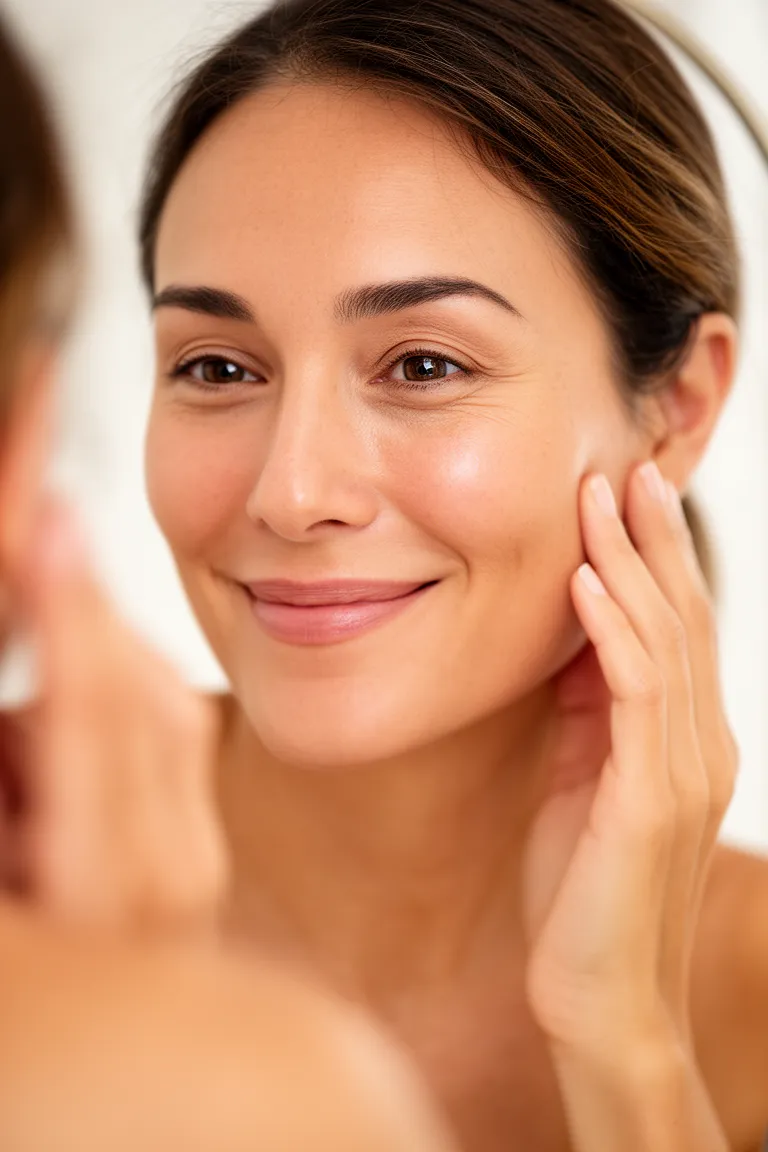
I was in the middle of my morning routine, smoothing on a serum, when I pressed a finger gently against my cheek. I let go, waiting for the skin to snap back into place. It didn’t. It just… slowly settled. There was a lingering, subtle laxity that felt new. This wasn’t about a wrinkle or a sunspot, things I’d made peace with. This was about a fundamental quality I’d taken for granted: my skin’s bounce. Its elasticity. And it seemed to be leaving the building.
The frustration was profound because I’d followed the rules. At 47, I was the friend who packed salads, logged miles on the treadmill, and had a lifetime supply of SPF 50. I wasn’t chasing a miracle; I was just doing the maintenance. So when I noticed my skin feeling thinner, looser around my eyes and jawline, and slower to recover from even a gentle press, it felt like a personal betrayal. I’d done everything right, and my skin was still changing. I started slathering on thicker, more expensive creams, hoping for a transformation. They’d give me a dewy, smooth look for a few hours, but by afternoon, that underlying lack of firmness was still there. I felt skeptical, almost foolish, for believing the next jar could fix it. This is the story of my experience restoring skin elasticity after 40—not with a magic potion, but by finally understanding what my skin actually needed.
The Morning I Realized My Skin Wasn’t Bouncing Back
It was more than a crease or a line. The signs were subtle but distinct, a quiet rebellion happening right under my nose. The skin on the back of my hands looked slightly crepey, like delicate tissue paper that had been crumpled and smoothed out one too many times. When I’d smile, the skin around my eyes would take a beat longer to smooth out afterward, as if it was getting tired. My décolletage, despite religious sunscreen application, had a new, soft laxity I didn’t recognize—not a wrinkle, but a gentle drape where there used to be a firmer line.
For months, I was confusing elasticity with dryness. I’d load on hydrating serums and rich night creams, thinking, “It just needs more moisture!” And while it would look better for a bit, the fundamental lack of support remained. This was the key distinction I had to learn: elasticity is about structural support, not surface moisture. It’s the difference between a plump grape and a firm, fresh one—both contain water, but one has a tautness the other has lost. My skin could be perfectly hydrated and still lack that underlying spring. That realization, standing there with my finger on my cheek, was my turning point. I wasn’t just “dry”; I was experiencing a natural but disconcerting shift in my skin’s very architecture.
Why Eating Well and Wearing Sunscreen Still Didn’t Solve Everything
This was the heart of my frustration, and understanding it was my first step toward a real solution. My healthy habits were—and still are—my greatest defense, but I had to accept they aren’t a force field against time. Think of it this way: sunscreen is a brilliant shield against new damage, but it can’t erase the cumulative, low-grade sun exposure from my first 30 years, before I became SPF-obsessed. That history is written into my skin’s foundation.
More importantly, after 40, our bodies undergo intrinsic changes that even the greenest smoothie can’t halt. Our production of collagen and elastin—the protein fibers that act like the scaffolding and tiny springs in our skin—naturally slows down. Each year, we make a little less and break down a little more of what we have. It’s like a construction crew that’s starting to retire, while the demolition team is still working at full speed.
Then came the piece I hadn’t fully appreciated: the hormonal shift. Declining estrogen during perimenopause and menopause directly and powerfully impacts skin. Estrogen is like a foreman for that construction crew; it helps keep skin thick, hydrated, and elastic by supporting collagen production and skin barrier function. As it dips, our skin can become thinner, drier, and yes, less firm. So, while my green smoothies and daily runs support my overall health and circulation beautifully, they can’t single-handedly override these powerful biological and hormonal timelines. I was slowing the damage, but I wasn't actively supporting the repair mechanisms that were now starting to lag behind. This is why I eat healthy and exercise but my skin is losing elasticity after 40. It’s not a failure; it’s physiology. Functional integrity of aging skin, from cutaneous biology to anti-aging...
The Thick-Cream Mistake I Kept Repeating
Armed with worry and a credit card, I dove into the world of “firming” and “lifting” creams. I’d find one with a promising description, apply it religiously, and wake up to skin that felt incredibly soft and smooth. “This is it!” I’d think, my hope renewed. But by midday, that lifted feeling was gone, and the mirror showed the same gentle sagging. I was on a hamster wheel of hope and disappointment, and I started to wonder if I was wasting money on firming creams after 40.
I was chasing temporary plumping, not structural tightening. Those rich creams were often loaded with brilliant humectants (like hyaluronic acid) to draw water into the skin and occlusives (like shea butter) to seal it in. This hydration plumps up skin cells, making lines less visible and texture smoother—but it’s a surface-level effect, like fluffing a pillow. Once the water evaporates or is metabolized, the underlying lack of support is still there. I also learned that slathering on “collagen cream” is a bit of a misnomer. Collagen molecules are too large to penetrate the skin’s surface and become part of your dermal scaffolding. These creams can be excellent moisturizers, but they aren’t replacing lost collagen.
My mistake was thinking moisturizer alone could fix sagging skin after 40. I was treating a symptom (dehydration that emphasized laxity) but missing the root cause (compromised collagen and elastin). Hydration is essential—it’s the comfort factor for your skin barrier—but it’s only one piece of the elasticity puzzle. I needed to stop asking my moisturizer to do a job it was never designed for.
What Actually Belongs in an Elasticity Routine After 40
After my cycle of hope and disappointment with fancy jars, I stepped back. I researched not products, but principles. I built a routine focused on protection, repair, and targeted stimulation, not just superficial smoothing. It’s simpler, more intentional, and far more effective than my old scattershot approach. This became my best skincare routine to restore skin elasticity after 40.
My Morning: The Unshakeable Foundation of Defense My morning is now non-negotiable and straightforward. I gently cleanse with a creamy, non-foaming formula—no more stripping my skin first thing. Then, I apply a lightweight moisturizer with ingredients like niacinamide to strengthen my skin barrier and peptides as supportive messengers. Then, the absolute bedrock: a broad-spectrum SPF 30 or higher. This isn’t just for beach days. Daily sun protection remains the single most effective way to prevent further breakdown of collagen and elastin. It protects the repair work you’re doing at night. Without it, everything else is like building a sandcastle as the tide comes in.
My Evening: The Gentle Art of Encouraging Repair This is where the magic of consistency happens. After a double cleanse to remove sunscreen and the day’s grime, I focus on ingredients that communicate with my skin to encourage its own renewal. Retinoids entered my life here, gradually and with respect. I started with a gentle over-the-counter retinol just twice a week, applying it over my moisturizer to buffer it. Retinoids work at a cellular level to speed up turnover and, crucially, stimulate collagen production. They are one of the few topically applied ingredients with decades of research backing their efficacy for improving skin texture and firmness. Does retinol help restore skin elasticity after 40? In my experience, yes—but it’s a slow, steady conversation, not a shout.
On my “off” nights from retinol, I might use a peptide serum. Do peptides actually improve skin elasticity after 40? I think of them as supportive coaches rather than star players. They send signals to the skin to help maintain its structure, and they’re fantastic for keeping the skin barrier happy and resilient. I always, always finish with a good barrier-repair moisturizer. Keeping my skin calm, hydrated, and non-inflamed is the critical environment that allows actives like retinoids to work their best. best anti aging skincare routine for men who already use sunscreen.
Building Resilience, Not Just Applying Products
Shifting my mindset was as important as changing my products. I stopped looking for overnight miracles and started thinking in terms of building long-term skin resilience. This meant prioritizing my skin barrier health above all else. A compromised barrier, often from over-cleansing or using too many active ingredients at once, leads to inflammation. And chronic inflammation is a collagen killer. It’s like trying to rebuild a house while there’s a small fire in the kitchen.
So, I became fiercely protective of my barrier. I swapped harsh scrubs for a gentle chemical exfoliant used once a week, if that. I stopped the tempting but destructive practice of layering multiple active serums. If my skin felt sensitive or looked red, I’d immediately scale back to just cleanser, a rich moisturizer, and sunscreen for a few days—a “skin fast.” This approach of “less is more, but better” was my real breakthrough. I was no longer just slapping on a thick cream for a temporary fix. I was consistently protecting my skin from new damage while gently, patiently encouraging it to rebuild its own foundation. dermatologist recommended anti wrinkle cream that doesn’t damage skin barrier.
| Approach | Core Focus | Realistic Timeline for Noticeable Change | Key Consideration |
|---|---|---|---|
| Barrier Repair & Hydration | Fixing dryness, reducing irritation, creating a healthy base. | 2-4 weeks for comfort and plumpness. | Essential first step, but won't directly restore lost firmness. |
| Barrier Repair + Sun Protection | Halting further collagen damage while calming the skin. | 1-3 months for improved skin tone and prevention of worsening laxity. | The foundational "hold the line" strategy for everyone. |
| Foundation + Targeted Actives (e.g., Retinoids) | Stimulating new collagen production and cellular renewal. | 3-6 months for subtle tightening and improved texture. | Requires patience and careful introduction to avoid barrier damage. |
| Topical Care + Professional Treatments | Addressing significant laxity and deeper structural loss. | Varies by treatment; results build over months. | Topical care maintains and enhances the results of in-office procedures. |
Scientific Evidence
When Should I Expect My Skin to Feel Different?
This was my hardest lesson in patience. In our world of instant results, skin works on a geological timeline. When I started this consistent, targeted approach, I noticed changes in distinct phases, which saved me from giving up.
Within days to weeks, my skin simply felt better. It was more comfortable, less tight after cleansing, and had a calmer, more hydrated glow. This was the immediate reward of treating my barrier well. But I knew this wasn’t the firmness I was after.
The real, tangible changes in texture and firmness took dedication. After about three to four months of consistent, gradual retinoid use, I started to feel it. It wasn’t a dramatic lift, but a subtle tightening when I touched my cheeks. The crepey texture on my chest softened, becoming more like skin and less like paper. The skin on my face just felt… denser, more supported. It’s a slow, cumulative process. Dermatologists often say it takes 6 months to a year of consistent use to see significant improvements in collagen-related concerns. How long does it take to improve skin elasticity after 40? For me, the honest answer was: a season of change, not a weekend.
I also made peace with the fact that topical care has its limits, and that’s okay. For more significant laxity, professional treatments like microneedling, radiofrequency, or laser therapies work at a deeper level to stimulate collagen. Knowing this wasn’t a admission of defeat; it helped me set realistic goals for my at-home routine. My job was to significantly improve, maintain, and protect—to build the healthiest canvas possible. my experience with firming serums for women over 40.
The Emotional Shift: From Frustration to Empowerment
Letting go of the fantasy of a single miracle cream was liberating. The journey to improve skin elasticity after 40 naturally and realistically isn’t glamorous. It’s boring consistency. It’s applying sunscreen on a rainy Tuesday when you’re just going to the grocery store. It’s skipping the retinoid tonight because your skin feels sensitive, even though you “should” use it. It’s understanding that you are working with your biology, not against it.
My skin at 47 is never going to be my skin at 27, and that’s not just okay—it’s right. It has lived, laughed, and survived. But it can be the healthiest, most resilient version of my 47-year-old skin. It has its own strength now, born not from an unbreakable bounce, but from care, understanding, and a lot of SPF. The feeling of betrayal faded, replaced by a sense of partnership. I’m not fighting my skin anymore; I’m supporting it. And that, it turns out, is where the real change happens.
Frequently Asked Questions

Q: I’ve tried retinoids before and they irritated my skin. How can I try again without causing damage? A: I totally get this—my first attempt was a red, flaky disaster. The key is to start slower than you think. Choose a low-concentration retinol (0.25% or 0.3%) and apply it only once a week, over the top of your moisturizer. This "buffering" technique was a game-changer for me. After two weeks, if all is calm, try twice a week. Always listen to your skin. If it stings or gets red, take a break for a few nights and baby it with barrier-repair creams. It’s a marathon, not a sprint.
Q: Do peptides actually improve skin elasticity after 40, or is it just marketing? A: They’re not magic, but they’re valuable team players. Peptides are chains of amino acids that act as messengers, signaling to your skin to support its own structure. They won’t work as dramatically as a retinoid for collagen stimulation, but they are excellent for maintaining skin health, supporting hydration, and keeping the barrier strong. Think of them as part of your skin’s support system, especially on nights when you’re not using a retinoid.
Q: How long does it truly take to see a difference in firmness with a new routine? A: Manage your expectations for a marathon, not a sprint. You may see improved hydration and brightness within weeks—that’s your skin thanking you for the TLC. For noticeable changes in firmness and texture (the collagen stuff), you need to commit to at least 3-6 months of absolutely consistent use of key ingredients like retinoids. Significant improvement often takes 6 months to a year. The timeline is why so many people give up, but consistency is far more important than the price tag of the product.
Q: If moisturizer isn’t fixing sagging skin, should I even bother with it? A: Absolutely, yes! This is a crucial distinction. A good moisturizer is vital for maintaining a healthy, functioning skin barrier. A compromised, inflamed barrier actually breaks down collagen. So, while moisturizer won’t directly lift sagging skin, it creates the optimal, calm, hydrated environment necessary for other ingredients (like retinoids) to work effectively and for your skin to repair itself. Don’t skip it—just understand its role as the essential foundation, not the whole solution.
Q: I’m overwhelmed. What’s the very first thing I should do? A: Start with what you’re already doing right: keep eating well, keep exercising, and for heaven’s sake, keep wearing that sunscreen. That’s your solid foundation. Then, pick one thing to add or change. For most people, that’s either introducing a gentle retinoid (slowly!) or making sure your moisturizer is truly barrier-supportive with ingredients like ceramides. Master that one change for a month before adding anything else. Progress over perfection, always.
📌 Love this guide? Save it on Pinterest!
Pin Restore Skin Elasticity After 40: Realistic Tips for Firmer Skin in 2026 to your board so you can come back to it later.

