
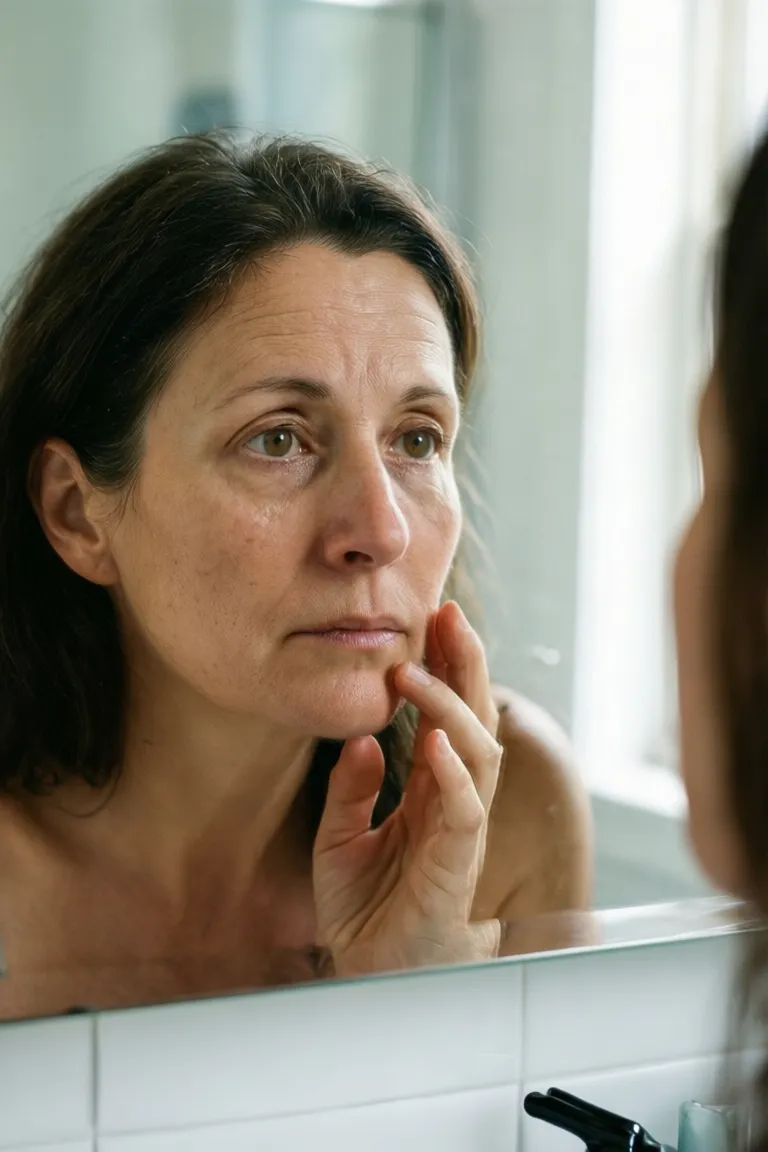
The tipping point wasn’t a special occasion or a bad photo. It was an ordinary Tuesday morning. I was standing in the brutal light of my bathroom, moisturizing my face, when my 48-year-old eyes caught a new, stubborn patch of uneven tone on my cheek. A fine line I swore wasn’t there last week seemed to deepen as I watched. I’ve always been meticulous—sunscreen every single day, the right serums, a disciplined routine. Yet there I was, feeling betrayed by my own reflection. I wasn’t looking for a magic potion, just something to help me feel like I was still in control. That’s when I started digging into anti-aging products and discovered Skinception. The reviews from women my age were glowing, full of words like “renaissance” and “game-changer.” But a sinking feeling quickly replaced my initial hope. My screen was flooded with options. The “official” site. Amazon. Random skincare boutiques. The prices swung wildly. Which one was real? The sheer volume of choices didn’t feel like freedom; it felt like a minefield, and I was terrified my desperation would lead me to step on it. I was about to navigate the confusing world of buying premium skincare online, hoping to find the real deal and not just waste my money on a counterfeit that could do more harm than good.
My Skincare Desperation: Why I Even Considered Buying Skinception in the First Place
My research into Skinception wasn't a casual browse; it was a mission born of specific frustration. The fine lines around my eyes were one thing, but it was the creeping loss of elasticity and that uneven, dull tone that really got to me. I wanted my skin to look healthy, not necessarily like I was 30 again. As I pored over forums and product pages, the key ingredients in Skinception kept popping up: peptides, hyaluronic acid, botanicals. I was familiar with these from my years of skincare dedication, but the formulation and concentration seemed to be the differentiator. The concept of supporting my skin's natural collagen production, rather than just slapping on a temporary plumping cream, resonated deeply with me. This wasn't about chasing a trend; it was about finding a partner for my mature skin's changing needs. The stories from other women who described a gradual but genuine improvement in firmness and radiance gave me a flicker of real hope. It felt like a potential solution that matched my "less is more, but make it potent" philosophy. Yet, this very hope made the next step—actually buying it—feel even more precarious. I was invested now, emotionally and intellectually, which made the risk of getting a fake feel like a personal violation. I spent nights reading through forums, looking for any my experience with Skinception from different sellers posts, trying to find a trustworthy path forward. The more I learned about what the product could do, the more I feared what a counterfeit version would do. It was a strange place to be: armed with knowledge but paralyzed by the fear of applying it incorrectly.
The Amazon Rabbit Hole: My First Attempt and Why Red Flags Started Waving
Naturally, my first instinct was to check Amazon. The convenience is a siren song, isn't it? I typed in "Skinception" and was immediately overwhelmed. Dozens of listings appeared, many with the Prime badge, but the seller names were a jumble of unfamiliar storefronts: "BeautySupplyHub," "ZenLifeDeals," "Global Wellness Direct." The product images looked almost identical, but on closer inspection, some had slightly different fonts or packaging layouts. The price comparison official site vs Amazon was shocking—some listings were 40% cheaper, which set off every internal alarm. I scrolled through reviews, a tactic that used to bring clarity but now bred more confusion. Buried among the positive ones were stark warnings: "Consistency is watery," "No seal on the jar," "This feels nothing like the sample I got from my dermatologist." I found myself obsessively clicking on reviewer profiles, trying to gauge if they were real people. Phrases like "I bought Skinception on Amazon and it felt off" haunted me. One listing, from a highly-rated third-party seller, even had a Q&A section where someone asked, "Is this authentic?" The seller's vague reply, "We source from a trusted US distributor," was a masterclass in saying nothing. That was my breaking point. The convenience evaporated, replaced by a knot of anxiety in my stomach. I realized I wasn't just buying a product; I was trying to decipher a code to avoid a scam, and the potential cost wasn't just financial—it was the health of my skin.
Identifying Unauthorized Sellers and Their Impact on Product Integrity
What I learned in that deep dive is that the "Sold by" line is everything. When a product is sold by "Amazon.com," it typically means it's sourced from the brand or a vetted distributor. But when it's a third-party seller, even a well-rated one, the chain of custody is a black box. That "trusted US distributor" could be anyone. They could be buying discounted, expired, or worse, counterfeit stock and reselling it. The integrity of active ingredients like peptides is incredibly sensitive to storage conditions and formulation. A fake might contain inferior or even harmful substitutes to mimic texture and color, doing nothing for my fine lines while potentially causing irritation or infection. The savings weren't a deal; they were a gamble with very high stakes. I started to see the Skinception price comparison official site vs Amazon not as a bargain hunt, but as a litmus test for legitimacy. A price that was drastically lower wasn't a gift; it was the first and biggest red flag.
Analyzing Suspicious Pricing and Inconsistent Imagery
The more I looked, the more inconsistencies I found. One listing would show the jar with a silver lid, another with a gold lid. The font for "Skinception" seemed bolder on some images, thinner on others. It was like playing a frustrating game of spot-the-difference, where the prize was not getting scammed. I realized these weren't minor variations; they were clues pointing to different sources, many of which were likely unauthorized. The mental energy I spent trying to be a detective was exhausting. I was supposed to be taking care of myself, not conducting a forensic investigation just to feel safe about a purchase. This was the emotional toll that no generic comparison article ever talks about.
Navigating the 'Official' Store: What Felt Right (and What Still Made Me Hesitate)
After closing my Amazon tab with a sense of relief, I headed straight to what appeared to be the Skinception official website. The difference was immediate. The branding was cohesive, the information about ingredients and clinical studies was front and center, and there was a clear "Contact Us" section. They offered bundled packages (like a 90-day supply) and a clear money-back guarantee. This was a huge trust-builder for me—a promise of recourse if the product didn't work for me. However, it wasn't all smooth sailing. The price was significantly higher than the too-good-to-be-true Amazon listings, which made me pause. Also, they heavily pushed a subscription model, which I'm always wary of. My hesitation wasn't about the product anymore; it was about the commitment and the fear of getting locked into something. I decided to test their customer service official site responsiveness. I sent an email through their contact form asking a technical question about the formulation and storage. To my genuine surprise, I got a detailed, polite response from a human within 24 hours, not a bot. That interaction was a turning point. It felt like I was dealing with a real company, not a faceless marketplace. They addressed me by name, answered my specific question, and even wished me well on my skincare journey. It was a small thing, but it made me feel seen, not just like another sale.
Understanding Official Guarantees and Return Policies for Peace of Mind
That money-back guarantee became my safety net. I read the terms carefully. It wasn't a lifetime guarantee, but a reasonable window that allowed me to truly test the product over several weeks. This policy directly addressed my core fear of financial loss. On Amazon, even with "A-to-z Guarantee," the process felt convoluted and required proving a product was fake, which is difficult. Here, the promise felt straightforward: if it doesn't work for you, for any reason, you can return it. This policy, coupled with the responsive customer service, shifted the value proposition. I wasn't just paying for a cream; I was paying for authenticity, support, and the elimination of risk. I also noticed they sometimes offered official store discount codes for first-time buyers or on bundled kits, which felt like a legitimate reward for buying direct, not a desperate price slash.
Evaluating Bundled Offers and Subscription Hesitations
The bundled 90-day supply made sense from an efficacy standpoint—skin turnover takes time—but the upfront cost was a hurdle. The subscription option, while convenient, triggered my aversion to auto-payments. What if it didn't work? What if I forgot to cancel? The official site did allow one-time purchases, which was crucial for me. This nuance is important: a legitimate company gives you choices and doesn't force you into a recurring payment model to get a fair price. This transparency, even when asking for a higher initial investment, ultimately felt more respectful than the confusing maze of Amazon.
Scientific Evidence
The Uncomfortable Truth: What I Learned About Counterfeits and Your Skin's Safety
My paranoia led me to do some grim research, and what I found validated every anxious thought. Counterfeit skincare is a massive, dangerous industry. These fakes aren't just inferior; they can be toxic. I read reports of counterfeit products containing high levels of bacteria, lead, mercury, and unregulated steroids. They might use cheap fillers that clog pores or harsh alcohols that strip the skin's barrier. For someone like me, with skin that's becoming more sensitive with age, the idea of applying an unregulated chemical cocktail was terrifying. The risks went beyond a waste of money—they included rashes, burns, hyperpigmentation, and long-term damage. Learning how to spot fake Skinception online became a crucial skill. I looked for tips: checking for tamper-evident seals, scrutinizing the quality of printing on the box, verifying batch codes (though this is harder without a genuine reference). The most important lesson was that if a deal seems too good to be true, it almost certainly is. The "savings" from a shady seller could end up costing infinitely more in dermatologist visits and skin recovery time. This wasn't just about avoiding Skinception scams online; it was about understanding that my skin is an organ, not a canvas for experimentation with unknown substances.
| Purchasing Approach | Best For | Realistic Risk Level | Key Consideration |
|---|---|---|---|
| Official Brand Website | Those prioritizing safety, authenticity, and support | Very Low | Higher upfront cost includes peace of mind, guarantees, and fresh product. |
| Major Authorized Retailer (e.g., reputable department store) | Shoppers wanting convenience with verified legitimacy | Low | Ensure partnership is stated on brand's website; prices are usually at MSRP. |
| Amazon (Sold & Shipped by Amazon.com) | Those who must use Amazon and understand the nuance | Moderate | You must verify "Ships from and sold by Amazon.com" – not just "Fulfilled by." |
| Third-Party Sellers on Marketplaces | Extreme bargain hunters (not recommended) | Very High | Extreme discounts are the primary red flag; verification of authenticity is nearly impossible. |
The Real Mechanism of Harm: Beyond "It Didn't Work"
It's easy to think the worst outcome is that a fake product simply doesn't deliver results. But the reality is more sinister. Counterfeits can disrupt your skin's microbiome, damage its lipid barrier (leading to chronic dryness and sensitivity), and introduce allergens that cause reactions you might blame on something else. For women in our 40s and beyond, repairing this kind of damage takes much longer. My research made it clear: the gamble isn't just on wasting money, but on potentially setting back my skincare progress by months. This understanding transformed my view from being frugal to being protective.
My Final Decision: Where I Bought Skinception and Why I'd Do It Again (or Differently)
After two weeks of intense scrutiny, I made my choice. I purchased a 90-day supply directly from the Skinception official website. The process was simple, and I received a tracking number promptly. When the package arrived, the presentation was pristine—secure packaging, a sealed jar, and crisp, professional labeling. That first application felt significant. The cream had a rich, luxurious texture that absorbed beautifully, without any odd chemical smell. Most importantly, my mind was completely at ease. I wasn't lying in bed wondering if I’d just smeared something dubious on my face. I was able to focus on the experience itself. As for the results, that's a story for another post, but the peace of mind was the first and most immediate benefit. So, where is the best place to buy Skinception online? From my harrowing journey, I can say without hesitation: directly from the official source. The price is the true price, and it includes the invaluable cost of certainty.
Actionable Advice for Identifying Legitimate Online Retailers
If you're considering Skinception or any premium skincare, my hard-won advice is this: Treat the official brand website as your primary source. Bookmark it. Use their official store discount codes if you can find them from reputable sources. If you must consider another retailer, only trust major, authorized department stores or pharmacies with a clear, stated partnership with the brand. For Amazon, only purchase if it says "Ships from and sold by Amazon.com" (not just "Fulfilled by Amazon"). The few extra dollars you might spend is not a premium; it's an insurance policy for your skin’s health and your own sanity. My experience taught me that in the world of online skincare, due diligence isn't just smart shopping—it's self-care. I now look at Skinception official website vs Amazon reviews with a critical eye, understanding that the platform itself is less important than the specific seller behind the listing.
The Emotional Payoff of Getting It Right
The journey didn't end at purchase. Using a product I trusted implicitly changed the entire ritual. My morning and evening skincare routine became a moment of calm investment in myself, not an exercise in anxiety. I could attribute changes in my skin—good or bad—to the product itself, not to the nagging doubt of its authenticity. That psychological freedom was, I realized, a huge part of the value. It allowed the product, and my own consistency, to truly work.
The Aftermath: What Happened After Eight Weeks of Using the Real Thing
I promised a bit about results, and I think it's fair to share. After about four weeks, the intense hydration was undeniable—my skin drank it up. By week eight, the dullness I'd battled had lifted significantly. My complexion looked more even, more alive. The fine lines? They're softer, less pronounced when I smile. It wasn't a facelift in a jar, but a gradual, believable improvement that made me feel like my efforts were finally being met halfway. Most importantly, I had no adverse reactions, no strange breakouts, no burning sensations. Just my skin, feeling cared for and responding. This is the outcome that's only possible when you start with a genuine product. It confirmed every difficult decision I made along the way.
Frequently Asked Questions
Q: Is it safe to buy Skinception on Amazon? A: It carries a significant and unnecessary risk. While Amazon is a legitimate platform, the multitude of third-party sellers makes verifying authenticity nearly impossible for the average buyer. Many listings are from unauthorized sellers distributing counterfeit, expired, or tampered goods. For absolute certainty, safety, and to access genuine customer support and guarantees, the official website is the only source I can personally vouch for after my experience.
Q: I found a Skinception product at a deep discount on another website. Should I trust it? A: Please exercise extreme caution. Drastic discounts (think 50% or more off the official price) are classic bait used by counterfeiters. Research that website thoroughly: do they have a physical address and a real phone number? Are there independent reviews of the site itself (not just product reviews on their page)? When in doubt, default to the brand's official store. Protecting your skin's health is worth far more than those fleeting "savings."
Q: How can I tell if the Skinception I already have is authentic? A: First, reflect on where you bought it. If it wasn't from the official site or a verifiably authorized retailer, your suspicion is valid. Check for a tamper-evident safety seal under the lid. Examine the packaging for any spelling errors, blurry logos, or flimsy cardboard. The cream itself should have a consistent, rich texture and a subtle, clean scent—not a strong perfumed or chemical odor. If anything about the look, feel, or smell seems "off," trust your instinct. It likely is.
Q: The official website is more expensive. Is the higher price truly worth it? A: Absolutely, and here's why: The price reflects guaranteed authenticity, fresh and properly stored active ingredients, direct access to clinical information, and legitimate customer support. You're also purchasing a real money-back guarantee. The lower price on unauthorized sites almost always indicates a compromise—in the product's integrity, its safety, or both. You're not just buying a cream; you're buying the confidence that what you're applying is what was designed and tested to be safe and effective.
Q: Does the official store offer any discounts or better deals? A: Yes, they often run promotions, particularly on bundled packages (like a 90-day supply), which can offer better value per ounce. They also occasionally offer first-time buyer discounts or promotional codes through their newsletter or reputable affiliate partners. These are legitimate ways to save while still ensuring you get the genuine product and all the benefits that come with it.
Q: What was the biggest lesson you learned from this whole experience? A: The biggest lesson was that my initial fear and skepticism weren't signs of being a difficult or paranoid customer; they were my intuition correctly identifying a real threat. In the online skincare world, convenience is often the enemy of safety. Taking the extra time, paying the true price, and buying directly from the source isn't being gullible—it's being smart and protective of your well-being. Your skin deserves that level of care.
📌 Love this guide? Save it on Pinterest!
Pin Skinception: Official vs. Amazon 2026 - Avoid Scams! to your board so you can come back to it later.

