

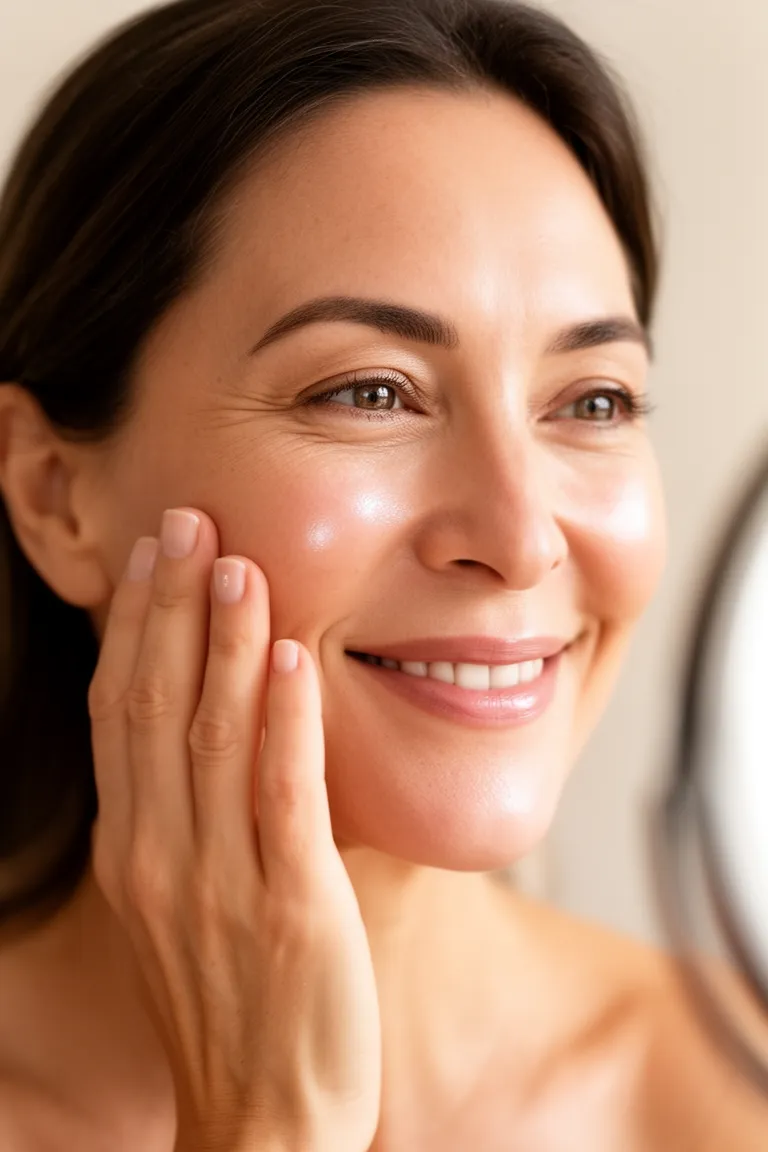
I was standing in front of my bathroom mirror, the kind of unforgiving, bright light that shows every detail. I’d just applied my latest investment—a tiny, opalescent jar of eye cream that cost more than my weekly grocery shop. I gently patted it in, following the instructions to the letter. Then I smiled. And there they were. The same fine lines, fanning out from the corners of my eyes like tiny rays of sunshine I hadn’t asked for. A wave of pure frustration washed over me. I did everything right. I wore sunscreen every single day. I had a consistent, multi-step skincare routine. I drank water, I got my sleep. I had spent what felt like a small fortune chasing a smoother look, and for what? To see the same lines appear the moment my face moved. That was the moment I stopped trusting the jar and started looking for real answers.
For years, I believed that if I just spent enough, tried the right luxury brand, or found that one magical potion, I could outsmart these lines. I felt a mix of betrayal and skepticism. The promises were so alluring: “visibly reduces wrinkles in 28 days,” “clinically proven to lift and firm.” My bathroom shelf was a graveyard of beautiful packaging and unmet expectations. I was a 42-year-old woman who followed the rules, and it felt deeply unfair that the rules weren’t working for me.
This is the story of how I moved from that place of frustration to one of understanding. It’s about what I learned when I stopped looking at price tags and started looking at skin biology, and how adjusting my expectations—not just my routine—finally brought me peace.
The Moment I Realized My Expensive Eye Cream Wasn’t Changing the Lines
My turning point wasn't a single dramatic event, but a slow, dawning realization built over months of careful observation, born from that same frustrated feeling in the mirror. I decided to become a detective in my own life. I started paying attention not just to how my skin felt after application, but to how it looked in different lights and, most importantly, in different states. I’d apply my luxurious cream, and sure enough, my under-eyes would feel supple and look dewy. In the soft, diffused morning light of my bathroom, things seemed improved. But by midday, in the stark honesty of my car’s rearview mirror, or when I laughed at a friend’s joke over lunch, the lines were back. I was paying for a feeling of hydration, not a change in texture.
How I Separated Hydration from Actual Wrinkle Improvement
I learned to separate hydration from actual wrinkle improvement. That plump, smooth feeling? That was the humectants and emollients doing their job, drawing water to the surface and temporarily plumping up the skin. It was like spritzing a wrinkled silk shirt—it looks better for a bit, but once it dries, the creases remain. I’d get a “glow” and a temporary tightness that felt like progress, but it was just my skin being well-moisturized. The actual landscape of my fine lines remained unchanged.
Why Price, Packaging, and Luxury Claims Were Poor Evidence
I had to admit I’d been seduced by the experience. The heavy glass jar, the delicate floral scent, the silky texture that melted in—it felt like self-care. But feeling pampered isn’t the same as seeing transformation. I realized the high price often covered marketing, beautiful packaging, and that luxurious sensory experience, not necessarily superior wrinkle-fighting technology. My experience with expensive eye cream for fine lines was one of diminishing returns; the fifth expensive jar didn’t work any better than the first.
What I Tracked in Neutral Light and During Facial Movement
So, I changed how I tracked progress. I stopped checking my skin right after application in forgiving light. Instead, I’d look in a well-lit mirror at the end of the day, with a completely neutral expression. Then, I’d smile broadly. Were the lines softer, less etched? Or were they exactly as defined as they’d been for months? This simple test was brutally honest. It showed me that while my skin was better hydrated, the structural pattern of my fine lines around my eyes even though I use sunscreen was stubbornly persistent. I was tracking the wrong results, and it was the root of my disappointment.
Why Fine Lines Around the Eyes Can Persist Despite a Good Routine
My journey to understanding truly began with a humbling lesson: the skin around my eyes is fundamentally different from the skin on my cheeks or forehead. It’s some of the thinnest skin on our entire body. Imagine the difference between a sturdy canvas tote and a delicate silk scarf. You wouldn’t treat them the same, yet I was essentially using the same anti-aging strategies on both areas and expecting identical results. This thinness means it’s more transparent (hello, dark circles), has fewer oil glands (making it prone to dryness), and shows the effects of movement and loss of support much more readily.
Thin Periocular Skin and Dehydration Lines
This fragility is why the area is so prone to what I call “chameleon lines.” What I often thought were permanent wrinkles were, in fact, dehydration lines masquerading as them. On days I was tired, had flown on a plane, or simply hadn’t drunk enough water, those lines looked deeper and more pronounced. A good hydrating cream would plump them away significantly, giving me false hope that I’d found “the one.” But true, persistent lines at rest were a different beast altogether.
UV Exposure, Collagen Loss, Genetics, and Repeated Expression
This is where the real culprits behind my persistent lines came into focus. Yes, I wore sunscreen now, but I couldn’t undo a lifetime of squinting in the sun, smiling, and expressing myself. Every smile, every concerned frown, every laugh creates a fold. For decades, our resilient skin bounces back. But over time, with the natural, inevitable decline of collagen and elastin—the skin’s support scaffolding—those temporary folds start to stick around as fine lines. No cream in the world can stop you from smiling, nor should it. Genetics also play a starring role, dictating how quickly we lose collagen and how our skin behaves. I had to accept that my routine was working against these factors, not magically deleting them.
When Lines at Rest Differ from Lines Visible Only When Smiling
I learned to categorize my lines. Some were only visible when I animated my face—these were the dynamic lines from expression. Others were faintly visible first thing in the morning, before I’d even smiled—these were the ones influenced by skin structure and hydration. This distinction was crucial. It helped me understand why a product could seem to work (it softened the static lines with moisture) but still fail me the moment I expressed joy. It answered my silent, frustrated question: "why isn't my expensive eye cream working on fine lines?" It was working on one aspect, but not on the deeply rooted, expressive patterns that made me, me.
What Eye Creams Can Actually Do—and What They Cannot
This was my paradigm shift, the moment I traded fantasy for fact. I had to get brutally honest about what I was actually buying. An eye cream, at its core, is a specially formulated moisturizer for a delicate area. A good one should hydrate intensely, strengthen the skin barrier with ingredients like ceramides to help it better retain moisture, and potentially deliver actives like antioxidants (Vitamin C, Ferulic Acid) to fight daily free radical damage. Some, with ingredients like peptides or certain forms of retinol, can signal the skin to produce more collagen over time, which can subtly soften the appearance of lines. Efficacy and Durability of the Association of Botox and Skinvive in the Treatment of...
Temporary Plumping from Humectants and Emollients
The immediate gratification we get from a new cream? That’s almost always thanks to humectants (like hyaluronic acid, glycerin) pulling water into the skin and emollients (like squalane, ceramides) smoothing the surface. This effect is real and valuable—it makes lines look less noticeable instantly. But it’s also temporary, often fading as the day goes on. I’d been mistaking this daily refresh for long-term change.
Retinol, Retinoids, Peptides, and Evidence Strength
For actual structural improvement, the ingredient roster gets shorter. Retinol and its prescription-strength cousins (retinoids) have the strongest evidence for stimulating collagen production. Peptides are promising, sending signals to the skin to support its own infrastructure. But here’s the critical part: these ingredients work gradually, over months, and the results are subtle. They don’t erase; they gently improve texture and resilience. And they’re available in drugstore formulas as well as luxury ones. The price tag doesn’t dictate their efficacy.
Why Eye Creams Cannot Reverse Structural Laxity, Deep Wrinkles, or Hereditary Bags
But here’s what no eye cream can do: it cannot erase. It cannot reverse significant volume loss, lift sagging skin, or remove deep, etched-in wrinkles. It cannot change your genetics or stop the natural aging process. It cannot banish hereditary under-eye bags (which are a structural fat issue). When I finally internalized this, the pressure lifted. I stopped asking my cream to perform miracles and started asking it to do a realistic job. This mindset shift was more powerful than any product.
Scientific Evidence
The Ingredient and Habit Changes I Prioritized Instead
I cleared my shelf of the fancy jars and started from scratch with an ingredient-first mentality. My goal was no longer “erase lines,” but “support, protect, and improve the health of my skin.” I stopped chasing a single miracle and started building a simple, evidence-based ecosystem for my delicate eye area.
Broad-Spectrum Sunscreen and Protective Habits
My first and most non-negotiable step remained daily, diligent application of a broad-spectrum sunscreen. But I became more meticulous, ensuring I was gently patting it right up to my lash line and onto my eyelids. I also became that person with the big sunglasses—not as a fashion statement, but as a physical barrier against squinting and UV rays. A wide-brimmed hat on sunny walks became non-negotiable. If my previous sun exposure contributed to the problem, I was determined to stop any new damage in its tracks.
Barrier-Supporting Moisturizers, Glycerin, Hyaluronic Acid, and Ceramides
For hydration, I sought out simple, effective humectants like glycerin and hyaluronic acid, but I applied them to damp skin to lock in water. For barrier support, I looked for formulas with ceramides and cholesterol—the building blocks of a healthy skin barrier. A strong barrier means better hydration retention, which alone can make a world of difference in the appearance of fine lines. Sometimes, I even found that a gentle, nourishing facial moisturizer with these ingredients, patted lightly around my eyes, was sufficient, challenging the notion that I needed a separate, expensive product at all.
Introducing Low-Strength Retinol Gradually and Safely
Then, I carefully introduced a low-strength retinol product designed for the eye area. I started with a pea-sized amount for both eyes, just twice a week, applied over my moisturizer to buffer it. I listened to my skin. A little redness or flaking meant I needed to slow down. After a month, I increased to every other night. This slow, gentle introduction was key to avoiding the irritation that can sabotage any routine. Patience was my new active ingredient.
To help visualize the shift in my approach, here’s a comparison of the different pathways I considered:
| Approach | Best For | Realistic Timeline for Visible Change | Key Consideration |
|---|---|---|---|
| Luxury Cream-Only Focus | Those valuing sensory experience & temporary hydration | Immediate (hydration), No long-term texture change | High cost for potentially minor functional benefit; can disappoint if expecting wrinkle reversal. |
| Basic Protection & Hydration | Anyone wanting to start simple, strengthen skin barrier | 2-4 weeks for improved hydration & plumpness | Foundation for all other approaches; prevents new damage but may not soften existing lines. |
| Hydration + Gentle Actives (e.g., Retinol) | People like me, ready for evidence-based, gradual improvement | 8-12 weeks for subtle texture improvement | Requires patience, consistency, and careful introduction to avoid irritation. |
| Professional Treatments + Home Care | Those seeking more significant changes beyond topical limits | Varies by treatment (laser, injection, etc.) | Addresses structural issues creams cannot; requires professional consultation and investment. |
How Long I Waited Before Judging the Results
This was perhaps the hardest lesson in patience. The beauty industry sells us on immediacy—28-day challenges, overnight transformations—but skin biology works on its own, slower schedule. I had to reset my clock and my expectations completely.
Immediate Effects: Hydration, Smoothing, and Temporary Depuffing
I allowed myself to appreciate the immediate effects: the comfort, the glow, the smooth feeling from a good hydrator. I celebrated these! They meant my skin was happy and quenched. If a cream reduced morning puffiness thanks to caffeine, that was a win I could see daily. But I stopped conflating that with the long-term goal of softening fine lines. This separation was vital for my sanity.
Eight to Twelve Weeks for Retinoid-Related Texture Changes
For the structural changes—the potential slight softening of lines from ingredients like retinol—I gave myself a full 12 weeks, or about three months. I took a single, close-up photo in consistent, neutral light on the day I started my gentle retinol. I didn’t look at it again for 12 weeks. Daily scrutiny in different lights was a recipe for disappointment and imagined results. When I finally compared, the changes were subtle. Not a single line was gone. But the skin between them looked a bit denser, more even-toned, and the finest of the lines seemed just a touch softer. It wasn’t a miracle, but it was real, measurable progress. This timeline helped me finally understand how long before eye cream improves fine lines around eyes in a meaningful, non-hydration-related way.
Irritation, Pregnancy Considerations, and When to See a Dermatologist
I also learned to respect the signs to stop or seek help. Persistent stinging, redness, or dermatitis around the eyes means your product or routine is harming your barrier, not helping it. I also understood that actives like retinol are off-limits during pregnancy or breastfeeding. If, after a solid 3-6 months of consistent, evidence-based care, you feel your concerns are beyond the scope of topicals, that’s the time to consult a dermatologist. They can assess if your fine lines around eyes even though I use sunscreen are amenable to professional treatments that truly address structure and volume. dermatologist recommended anti wrinkle cream.
Letting Go of the Fantasy and Embracing Reality
The most profound change wasn’t on my skin; it was in my mindset. I had to mourn the fantasy sold to me—the idea that I could purchase my way back to 25-year-old skin. I let that go. In its place, I embraced a new reality: my face tells my story. The lines around my eyes are a map of thousands of laughs, moments of concern, and sunny days. My goal shifted from eradication to graceful, loving maintenance.
Skincare became less about fighting a flaw and more about practicing self-care and health for my largest organ. I now see my routine as a loving act of preservation, not a desperate act of correction. The pressure is off. I use products that make my skin feel healthy and resilient, and I trust that a combination of good ingredients, protective habits, and time will help it look its best. And when I smile in the mirror now, I see the lines, but I also see a woman who is informed, empowered, and no longer wasting her energy—or her money—on empty promises. firming skin treatment for women over 40 that actually works.
Frequently Asked Questions
Q: How long does it really take to see a difference in fine lines from an eye cream? A: It’s crucial to separate hydration from structural change. You may see lines look softer and plumper from hydration within minutes or days. For actual improvements in skin texture and collagen support from ingredients like retinol or peptides, you need to be patient. Most dermatologists recommend a minimum of 8 to 12 weeks of consistent use to judge if it's making a visible difference. In my experience, the change is subtle—think “softer” not “gone.”
Q: Am I just wasting money on a separate eye cream? Can’t I use my face moisturizer? A: This is a great question and often comes down to personal need. If your facial moisturizer is gentle, fragrance-free, effectively hydrating, and doesn’t irritate your eyes, it can absolutely be used around the eyes. The main reason for a separate eye cream is formulation: they are typically designed with milder concentrations of actives and richer emollients for that drier, thinner skin. If your face moisturizer does that without irritation, you can skip the extra product and cost.
Q: What should I look for in an eye cream if I want to address fine lines? A: Focus on the ingredient list, not the brand name or price. Look for evidence-backed ingredients like retinol (or its gentler derivatives like retinyl palmitate), peptides (like Matrixyl), antioxidants (Vitamin C, Niacinamide), and solid hydrators (hyaluronic acid, glycerin). Ensure it’s formulated for the eye area to avoid irritation. A simple formula with one or two key actives you’ll use consistently is often more effective than a complex "miracle" blend that sits on your shelf.
Q: Why do I still have under-eye wrinkles despite a good skincare routine? A: Please know you are not alone, and this is incredibly common. A good routine can optimize your skin's health, but it can't override factors like genetics, bone structure, the natural, lifelong thinning of skin, and the repeated muscle movements from smiling and squinting. Your routine is helping to slow the process and improve skin quality, but some lines are a natural, beautiful part of an expressive, lived-in face. This is the core reason behind my own journey of I tried expensive eye creams but still have fine lines around my eyes.
Q: When should I consider seeing a dermatologist about eye area concerns? A: If you experience persistent irritation, redness, or swelling from any product, stop using it and consult a professional. If you're interested in more significant results than topicals can provide, a dermatologist can discuss in-office procedures like peptide injections, laser treatments, or other modalities that address skin tightening and volume loss, which creams cannot do. They can also help create a personalized plan if you feel stuck. I do everything right but my skin still looks dull.
📌 Love this guide? Save it on Pinterest!
Pin Expensive Eye Creams Don't Work? My Honest 2026 Results & What Does. to your board so you can come back to it later.

