
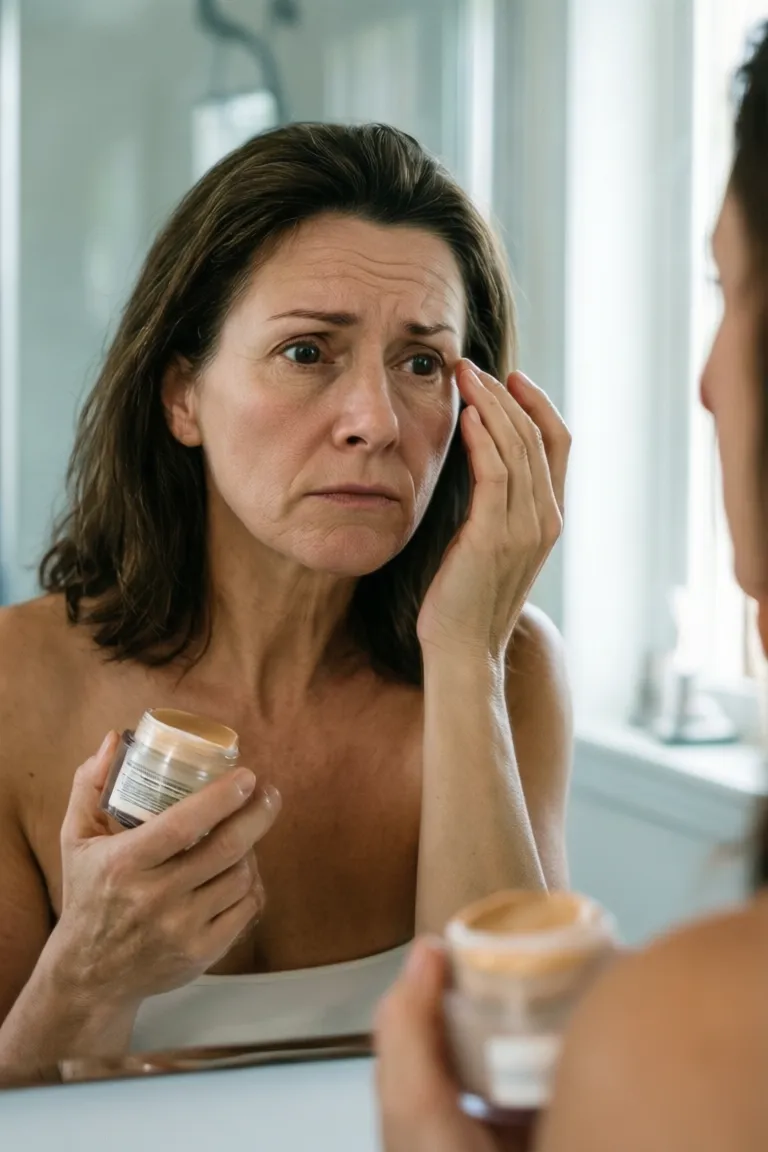
The morning light in my bathroom is brutally honest. At 48, it’s a collaborator I have a complicated relationship with. On this particular day, it was highlighting a network of fine lines around my eyes that seemed deeper overnight and a general dullness that my trusted moisturizer just couldn’t seem to cut through. My commitment to non-invasive, at-home skincare isn’t a hobby; it’s a deliberate choice, a quiet rebellion against the idea that aging means letting go. After months of reading testimonials from women whose skin stories mirrored mine, I’d finally decided on Skinception. The promise wasn’t about turning back time, but about reclaiming a certain radiance I missed. But the moment my decision crystallized, my excitement evaporated, replaced by a thick fog of consumer anxiety. A quick search showed me two paths: the sleek, authoritative Skinception official website, and a labyrinth of Amazon listings with fluctuating prices and a chorus of unknown sellers. My cursor danced between them. One promised a guarantee I couldn’t see; the other promised a deal I couldn’t trust. This wasn’t just shopping. It felt like a high-stakes bet where the wager was my skin’s health and my peace of mind. So, I did the only thing that made sense to my frustrated, meticulous brain: I bought from both. This is my journey from confusion to clarity, a side-by-side test born from my own very real fears, and maybe yours, too.
My Initial Hesitation: Why I Was So Skeptical About Buying Skinception Anywhere But Direct
My distrust wasn't born in a vacuum. It was cultivated in the quiet, anxious hours I spent scrolling through Reddit's skincare forums and dedicated beauty blogs, spaces where women speak with a raw honesty you rarely find in marketing copy. I remember one story vividly: a woman my age who bought a cult-favorite vitamin C serum from a third-party seller. The packaging was flawless, but the product inside gave her a burning rash that took weeks to calm down. Her conclusion? It had been diluted with something harsh. Others shared photos of jars that arrived with broken safety seals, or creams with a strange, separated consistency that was "just off." The emotional impact of these stories stayed with me. It wasn't just the financial sting of wasting $100 on a fake; it was the profound violation. Here we were, trying to invest in self-care, in feeling good in our own skin, and the process itself left us feeling cheated and foolish.
For women navigating skincare in our 40s and beyond, our skin often becomes a more sensitive partner. It reacts differently. The idea of introducing a mystery ingredient—a potential counterfeit that could be anything from a harmless knock-off to an actively harmful substance—felt incredibly reckless. I kept having this internal monologue: "What if a fake product not only fails to work but triggers a sensitivity that sets my entire routine back months?" I realized my fear wasn't just about the product not working; it was about it actively working against me. Furthermore, I started to understand that brands like Skinception aren't just selling a mix of ingredients; they're selling a specific, calibrated formulation. The active components, their sourcing, the stabilizers that make them effective—a counterfeit might mimic the look, but without the precise science, it's just expensive, perfumed aloe vera. This is why 'official' stopped being about brand loyalty and started being about self-preservation. It was about ensuring the clinical results I was reading about were actually in the jar I was applying to my face every night. My gut screamed to go direct, but the siren song of Amazon's one-click convenience and those tantalizing "Today's Deal" badges was a constant, nagging counterpoint.
My Amazon Experience: Convenience vs. The Lingering Doubt of Authenticity
I finally caved to the convenience. I clicked "Buy Now" on an Amazon listing that had a "4.5-star average from 1,200+ ratings" and, crucially, the Prime badge. The allure was undeniable: it would be at my door in 48 hours, and the price was about $15 less than what I saw on the official site. The transaction was frictionless, a masterclass in modern ease. Two days later, a standard Amazon bubble mailer was in my hands. Inside, the Skinception box looked right. The logo was there, the color scheme matched the website photos. But as I held it, my fingers registered the first subtle dissonance. The cardboard felt a bit thin, a little less substantial than I’d imagined for a product at this price point. It was the difference between a premium greeting card and a magazine insert.
The real mental spiral began when I examined the batch code. It was stamped on the bottom, but the font looked… softer? Less crisp? I pulled up an official unboxing video from the brand's YouTube channel and paused it, squinting at my screen. It was close, but not a perfect match. Was I being paranoid? Absolutely. But that’s the insidious psychological tax of this marketplace model. The seal under the lid was intact, which offered a sliver of relief. Upon opening it, the cream was a pale peach color with a light, clean, floral scent—pleasant and inoffensive. It absorbed quickly into my skin. Yet, for the entire first week of my new ritual, my mind was a split screen. One side was hoping for results; the other was hyper-vigilantly scanning for redness, itching, or any sign that something was wrong. Every application was preceded by that nagging question: "Is this real?" I was trying to evaluate a product's performance while fundamentally distrusting its origin. It's an impossible task.
Navigating the Murky Seller Landscape
I went back to the Amazon product page to investigate the seller. The listing was a jumble. It said "Visit the Skinception store" but also "Ships from Amazon" and was sold by a third-party seller with a generic name. There was no way to tell if this entity was an authorized retailer or just someone reselling stock they'd acquired who-knows-where. This ambiguity is the core of the problem. The product itself seemed okay, but "seemed okay" isn't the standard I want for a premium skincare investment. The texture, while smooth, had a slightly more fluid consistency than I expected from the rich descriptions I'd read. After two weeks of use, my skin felt adequately hydrated, but the targeted areas—those fine lines around my eyes—looked unchanged. Was it because the product needs a full 30 days? Or was it because the active ingredients were absent or degraded? The experience left me in a maddening state of limbo, unable to trust the results, or lack thereof, because I couldn't trust the source. fine lines under eyes won’t go away no matter what I try.
Going Straight to the Source: What Buying From the Official Skinception Store Felt Like
After the mental gymnastics of the Amazon purchase, ordering from the official Skinception store felt like a deliberate, calming deep breath. The website itself was a different universe—clean, focused, and free of the visual noise of competing ads or confusing alternate sellers. It was rich with information: detailed explanations of the key ingredients, their sourcing, and links to clinical studies. This wasn't just a sales page; it was an education. I added the product to my cart, noted their subscription option (which promised a better long-term price), and checked out. The process was straightforward, though standard shipping estimated five business days, not two.
When the package arrived, the experience began at my doorstep. It was in a custom-branded box, not a generic mailer. The unboxing felt intentional, like receiving something of value. The product box itself was noticeably sturdier, with crisp, high-quality printing and a shiny, holographic safety seal over the closure—a feature missing from the Amazon box. The batch code was laser-etched, sharp and easy to read. Just holding it, the perceived authenticity was palpable. This wasn't just a jar of cream; it felt like the jar, the true reference point.
The Intangible Value of Direct Support and Guarantees
Upon opening it, the scent was identical—a good, reassuring sign—but the texture was unmistakably different. It was denser, richer, and had a luxurious, velvety weight that melted into my skin with a more substantial feel. The psychological shift, however, was the real transformation. The website clearly outlined a money-back guarantee and had accessible customer service contact info. I knew that if anything was amiss—with the shipment, the product, or my experience—there was a dedicated team behind the brand to address it. There was no anonymous third-party seller to navigate. This understanding transformed the purchase from a simple transaction into the beginning of a relationship with the brand itself. I started using this jar with a mindset of optimism and commitment, not suspicion. For the first time, I could actually evaluate the product on its merits, free from the filter of doubt. I tried an intensive eye cream for deep wrinkles and it didn’t work.
Scientific Evidence
The Side-by-Side Showdown: My Skin's Verdict and My Wallet's Opinion
With both jars side-by-side on my vanity, I began a deliberate, month-long experiment. Visually, the creams were the same pale peach color. The most immediate physical difference was in consistency. The official cream held its shape when I dipped my finger in; it was like cool, dense yogurt. The Amazon version was more like a loose sour cream, spreading easily but lacking that luxurious body. Both absorbed well, but the official one left a more pronounced feeling of deep nourishment—a plump, quenched sensation that lasted for hours.
For the real test, I applied the official cream to the left side of my face and neck, and the Amazon cream to the right. I tracked this for four weeks, taking weekly photos in the same harsh morning light. This wasn't lab-grade science, but it was personal, real-world evidence. By the end of week two, both sides were hydrated, but the left side had a more consistent, "bouncy" plumpness throughout the day. By week four, the difference was something I could see without scrutinizing photos. The fine lines on my left temple and around my left eye appeared subtly softer, less etched. The overall complexion on that side had a healthier, more vibrant glow—a radiance from within. The right side looked fine, perfectly moisturized, but it lacked that same vitality. It was the difference between skin that looked cared for and skin that looked revived. Dupilumab treatment improves signs, symptoms, quality of life, and work productivity in patients with atopic hand and foot dermatitis: Results from a phase 3, randomized, double-blind, placebo-controlled trial.
A Cost Analysis Beyond the Price Tag
Financially, the Amazon purchase had a lower initial price. However, the official store's subscription discount, which I would use for a refill, brought the long-term cost per ounce to a very competitive level, sometimes even lower than the non-sale Amazon price. But the most critical calculation was psychological. The peace of mind from the official purchase was invaluable. I stopped wasting mental energy on forensic analysis of packaging and consistency. I could fully engage in my skincare ritual as a moment of self-care, not an investigation. The potential savings from Amazon came with a hidden, exhausting tax of doubt. For an investment in my well-being, that tax was far too high. The official product delivered observable, superior results for me, making any minor upfront difference in cost not just justified, but irrelevant.
| Purchasing Approach | Best For | Realistic Timeline for Peace of Mind | Key Consideration |
|---|---|---|---|
| Official Brand Website | Those prioritizing guaranteed authenticity, freshness, and direct support | Immediate (upon unboxing) | Higher perceived upfront cost, but often better value with subscriptions/bundles. |
| Major Marketplace (e.g., Amazon, Walmart) | Shoppers valuing extreme convenience and potential last-minute deals | Uncertain (lingering doubt may never fully resolve) | Risk of counterfeit, old stock, or inconsistent product; seller vetting is crucial. |
| Authorized Retailer List (e.g., select dermatology offices, premium beauty sites) | People who want a middle ground of convenience and verified legitimacy | High (once retailer is verified) | Requires checking the brand's official "Where to Buy" page; availability may vary. |
| Third-Party Resellers & Discount Sites | Budget-focused shoppers willing to accept high risk | Very Low | Highest chance of counterfeit, expired, or tampered goods; little to no customer recourse. |
The Broader Lesson: How to Vet Any Premium Skincare Purchase Online
This experiment taught me a framework that I now apply to every premium skincare purchase, a way to navigate the digital shelf with more confidence. First, my new golden rule: always look for an "Authorized Retailers" or "Where to Buy" page on the brand's official website. If Amazon or a specific discount site isn't listed there, that's a bright red flag. Second, if you do venture onto a marketplace, dig into the seller details. "Ships from and sold by Amazon.com" is generally safer than a random third-party name, but it's still not a guarantee of direct-from-manufacturer freshness—it could be coming from a commingled inventory bin where real and fake products are stored together.
Most importantly, I learned to value the intangible elements of the purchase. Your mental state is part of your skincare routine. A cream applied with anxiety and suspicion doesn't work the same as one applied with trust and optimism. The ritual matters. The assurance that you're using exactly what the chemists formulated matters. For those of us deeply invested in our skin's health, this isn't just consumer advice; it's a form of self-respect. It’s choosing the path that aligns with your goals, not just your impulse for a quick deal. honest review of collagen boosting skincare products that didn’t work for me.
My Final Recommendation: Where I'll Be Buying Skinception From Now On (And Why)
My journey through both channels led me to a clear, unwavering conclusion. I will be buying Skinception exclusively from their official website. The guaranteed authenticity, the superior product consistency, and the tangible results on my skin made the choice obvious. The official Skinception store is, without a doubt, the safest place to buy Skinception if your primary concerns are ingredient integrity and achieving the promised benefits. If you see a price on Amazon that seems too good to be true, trust that instinct. The risk of receiving an old, expired, or counterfeit product isn't just a financial loss; it's a setback for your skin's health and your emotional well-being.
Empowering Your Purchase Beyond This One Jar
Let this experience be a lesson you can carry forward. When you invest in premium skincare, you're not just buying a commodity; you're buying into a specific formulation and the science behind it. Protect that investment by going straight to the source whenever possible. The minor conveniences of marketplaces pale in comparison to the major confidence of knowing exactly what you're putting on your skin. For anyone standing where I was, cursor hovering, paralyzed by choice and fear, I say this: choose the path that lets you focus on your skin, not on your doubts. Choose direct.
Frequently Asked Questions
Q: Is Skinception sold on Amazon real or fake? A: This is the million-dollar question, and the answer is frustratingly murky. Amazon is a vast marketplace with both authorized sellers and unauthorized third-party resellers. Some products are perfectly authentic, while others may be old stock, counterfeit, or tampered with. The core issue is that as a consumer, you have no consistent, reliable way to tell the difference once it arrives at your door. Based on my side-by-side test and the subtle but meaningful differences I observed in packaging and product texture, I believe there is a very real and common risk of receiving a product that isn't exactly as the manufacturer intended, which can directly impact its efficacy.
Q: What were the most concrete differences you noticed between the two jars? A: The differences were subtle but significant upon direct comparison. First, the packaging: the official box was sturdier with a holographic seal; the Amazon box felt thinner. Second, the product texture: the official cream was denser and more luxuriously thick, holding its shape. The Amazon version was slightly more fluid. Third, and most importantly, the results: after four weeks of split-face testing, the side using the official product showed more pronounced improvement in skin plumpness and a greater reduction in the appearance of fine lines. The scent was identical, which shows how convincing fakes can be on surface-level details.
Q: Was the price difference enough to justify the risk of buying from Amazon? A: In my case, the initial price difference was about $15, which felt significant at the moment of purchase. However, when I factored in the long-term value, the math changed. The official Skinception store offers subscription discounts and bundle deals that often make the price per ounce very competitive, sometimes even lower than the standard Amazon price. More critically, you must factor in the "risk cost." The mental energy spent doubting the product, the potential for zero results (or adverse reactions), and the lack of direct customer support make any small upfront savings on Amazon simply not worth it for a premium, results-driven product.
Q: What if I have a bad reaction or simply don't like the product? How do return policies compare? A: This is a major point in favor of buying direct. The official Skinception website has a clear, stated money-back guarantee policy. You're dealing directly with the brand, which has a vested interest in your satisfaction. Returning a product to an Amazon third-party seller, however, can be a labyrinthine process with policies that vary wildly from seller to seller. Some may be accommodating, while others may refuse returns on "opened skincare." If you have sensitive skin or are trying a new premium product for the first time, the security of the official return policy is a crucial safety net that marketplace purchases typically lack.
Q: How can I ensure I'm getting the freshest batch possible, with the most potent active ingredients? A: Buying directly from the official brand store is the single best way. Brands typically ship their newest, freshest batches to their own warehouses first. Products sold by third-party sellers on Amazon or elsewhere can sit in storage for months, or even years, potentially leading to degraded actives and reduced effectiveness. The official channel gives you the highest probability of receiving a product made and shipped with the brand's strict quality control and freshness standards intact.
📌 Love this guide? Save it on Pinterest!
Pin Skinception: Official Store vs. Amazon 2026 - My Honest Review to your board so you can come back to it later.

