
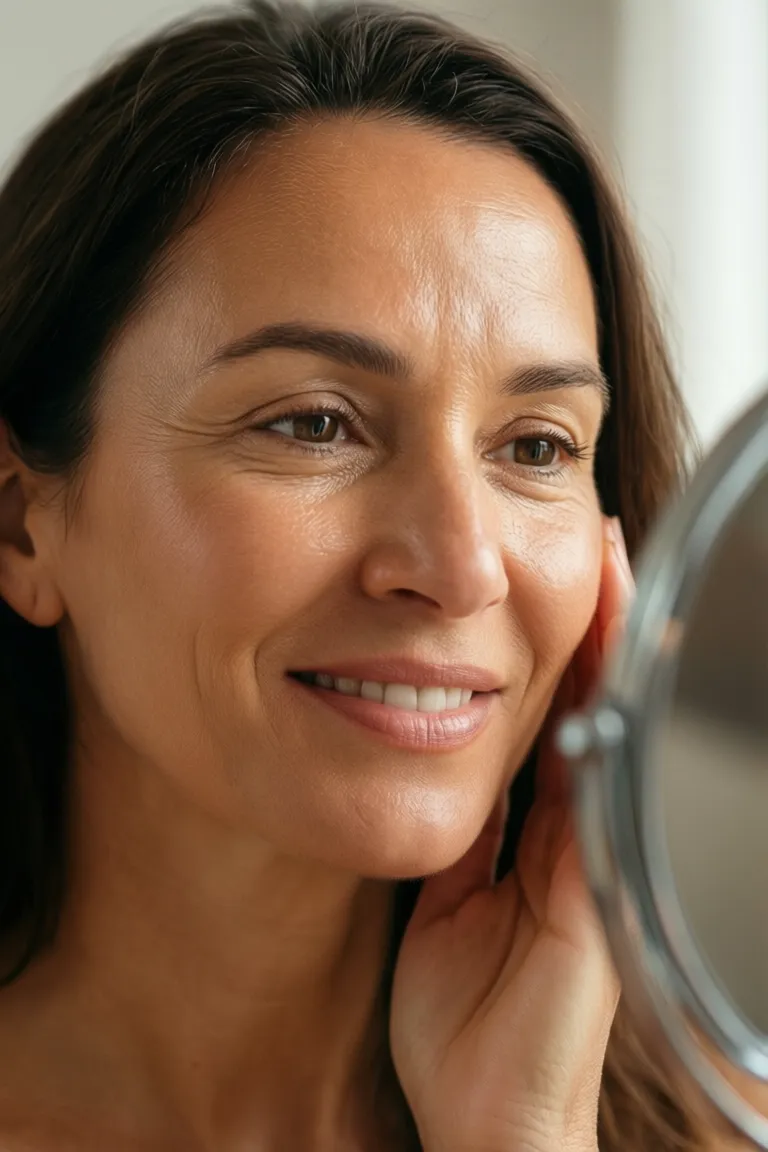
I did everything right. I ate my leafy greens, drank my water, and never missed a workout. I’d been a sunscreen devotee since my late twenties. So when I turned 47, I expected my skin to reflect that discipline. Instead, I saw a stranger in the mirror. My jawline seemed softer, my cheeks didn’t snap back the way they used to, and the skin on my neck had a delicate, crepey texture that no amount of moisturizer could erase. I felt a quiet sense of betrayal. I’d followed the rules, so why was my skin losing its fight with gravity?
The moment of truth came from a candid photo a friend took. There I was, laughing and healthy, but all I could see was the undeniable sagging along my jaw. It wasn’t about wrinkles; it was about a lack of firmness, a loss of that resilient bounce. I’d bought every “lifting” cream at the drugstore, each one promising a firmer, younger look. They’d leave my skin dewy for a few hours, but by morning, that subtle droop was still there. I felt frustrated, skeptical, and frankly, a little cheated by the entire anti-aging industry. Was this just my inevitable fate? This is the story of how I moved past that frustration and learned what it truly takes to restore skin elasticity after 40.
The Morning I Realized My Healthy Routine Wasn’t Stopping Sagging
I was drying my face after my morning cleanse, the same routine I’d had for years, when I gently pulled at the skin on my cheekbone. It took a second longer to settle back into place. That tiny delay was a revelation. My healthy lifestyle—the spin classes, the salmon salads, the eight glasses of water—was supporting my overall vitality, but it wasn’t a magic shield against this specific change. I began to understand that dehydration lines were one thing, but this was different. This was laxity. My skin was becoming thinner, less springy, like a once-tight elastic that had lost its snap. I had to learn to distinguish between temporary plumping from a good moisturizer and the actual structural firmness I was missing. This shift in my skin elasticity after 40 was happening despite my best efforts, and I needed to understand why before I wasted another cent on false promises.
It was a humbling pivot. I had to accept that the visible changes weren't a referendum on my willpower. They were a signpost on a road everyone travels. The frustration came from the mismatch: I looked at my vibrant life and expected my skin to tell the same story. When it didn't, I blamed myself or the products. That morning, I stopped blaming and started observing. I noticed the skin on the back of my hands was also thinner, more translucent. I saw that the fine lines around my eyes were less of a concern than the overall softening of my facial contours. This wasn't about surface flaws; it was about the foundation softening. And that required a different kind of repair.
What Actually Changes in Skin Elasticity After 40
My journey to understand this started with some humble pie. I had to accept that aging isn’t a personal failure; it’s biology. The framework of our skin is built on collagen and elastin fibers. Think of collagen as the steel beams in a building and elastin as the bungee cords that allow skin to stretch and recoil. After 40, our bodies produce less of both, and the existing fibers become more disorganized and brittle. But here’s the kicker I didn’t fully appreciate: cumulative sun exposure. Decades of UV damage, even with sporadic sunscreen use in my youth, lead to something called solar elastosis, where elastin fibers become degraded and clumped, like old rubber bands left in the sun. They’re still there, but they’ve lost all their snap. Functional integrity of aging skin, from cutaneous biology to anti-aging...
Add in the hormonal shifts of perimenopause and menopause, which can dramatically reduce skin thickness and moisture, and you have a perfect storm. Estrogen, which helps keep skin plump and hydrated, takes a nosedive. My healthy habits were absolutely slowing the damage, but they couldn’t rebuild a structure that was naturally declining and had accumulated decades of silent sun damage. This was the crucial insight: improving skin firmness wasn’t about prevention anymore; it was about intelligent, targeted support and repair. It explained why, despite eating healthy and exercising, I still had loose skin and firmness after 40.
Why Diet and Exercise Aren't Enough
While my clean diet full of antioxidants fought free radicals and my workouts boosted circulation, they couldn't directly instruct my fibroblasts (the collagen-making cells) to work at their youthful pace. They created a healthy environment for skin to thrive, but they couldn't reverse solar elastosis or commandeer hormonal shifts. They were the background music, not the main actor in this particular play.
The Firming Creams I Tried—and Why the Results Disappointed Me
Armed with a new mission but old habits, I became a skincare guinea pig. I tried creams with fancy “tri-peptide complexes” and “marine extracts” that cost a small fortune. The pattern was always the same: immediate hydration, a nice glow, maybe even a temporary plumping effect from ingredients like hyaluronic acid that drew water to the surface. My skin would look great for an evening out. But by the next morning, the fundamental lift and snap-back firmness I craved never materialized. I was expecting a moisturizer to perform structural engineering, and that was my first big mistake. I was treating sagging skin after 40 with a tool designed for surface hydration.
I also fell into other common traps. I over-exfoliated, thinking smoother skin would look tighter, only to end up with irritated, vulnerable skin that looked worse. I layered too many active serums at once—a vitamin C, a retinol, a peptide—compromising my skin barrier and causing redness that made any firmness impossible to assess. I was impatient, abandoning products after a month when I didn't see a “wow” result. My experience taught me that while these creams can be excellent supportive players, expecting them to single-handedly restore skin elasticity after 40 naturally was a setup for disappointment. They needed to be part of a chorus, not a solo act.
The Realistic Role of Key Ingredients
Through this costly trial and error, I learned to decode the promises. Hyaluronic acid is a magnificent hydrator, but it's a temporary resident, plumping from the outside in. Peptides are gentle messengers that can encourage collagen production, but they work slowly and subtly. They're the supportive friends, not the powerhouse. I was using them, but I wasn't using them correctly or consistently, and I wasn't pairing them with the key player that could actually accelerate cellular renewal.
Why My Anti-Aging Skincare Routine Wasn’t Improving Firmness
This was my “aha” moment, the core of the content gap I never found in generic articles. My old routine was a scattershot approach to anti-aging. It focused on surface-level concerns—brightening a dark spot, calming redness—but it wasn't strategically assembled to combat laxity. I was using a vitamin C serum in the morning and a random retinol twice a week, but I wasn't consistent with either, and I wasn't protecting my skin barrier to allow these actives to work effectively. I was treating the symptoms (dullness, fine lines) but not the root cause of my loose skin: the depleted collagen and elastin. I noticed fine lines around my eyes suddenly in my late 30s what changed.
I realized I needed to shift from a “prettying” routine to a “building” routine. The goal wasn't just to look good for a day; it was to make my skin biologically stronger over time. My routine was full of good intentions but lacked architectural integrity. There was no foundation of consistent sun protection to protect new collagen. There was no disciplined, gradual introduction of the most evidence-based ingredient for collagen stimulation. There was no dedicated barrier repair to ensure my skin could handle the actives without revolting. I was trying to build a house without a blueprint, wondering why the walls were still wobbly.
My Realistic Skin-Elasticity Routine: SPF, Retinoids, Peptides, and Barrier Care
I stripped my routine down to basics and rebuilt it with intention, focusing on how to improve loose skin and firmness after 40 with a sustainable plan. The cornerstone, which I now treat as non-negotiable as brushing my teeth, is daily broad-spectrum SPF 50. Every single morning, rain or shine, indoors or out. If my previous sun protection was a flimsy umbrella used only at the beach, this was a permanent, full-body raincoat. This one habit does the heavy lifting of preventing further elastin degradation.
My morning routine became gentle and protective: a lukewarm water rinse or the mildest cleanser, a peptide serum, a simple moisturizer with ceramides, and that holy-grail sunscreen. The peptide serum felt different now—not like a miracle, but like a consistent, gentle nudge to my skin’s own repair crew.
The real game-changer came at night. I introduced a retinoid slowly, starting with a gentle over-the-counter retinol once every three nights, using the “sandwich method”: moisturizer, retinol, moisturizer. This wasn't about aggression; it was about diplomacy. When my skin tolerated that without dryness or irritation, I gradually increased frequency. After several months, I consulted a dermatologist for a prescription option. The key was unwavering consistency and patience. This wasn't a sprint; it was the skincare marathon of my life. My evening routine was focused on repair and communication: telling my skin to renew itself while giving it the soothing, nourishing environment it needed to do that work without protest. dermatologist recommended anti wrinkle cream.
| Approach | Best For | Realistic Timeline for Visible Change | Key Consideration |
|---|---|---|---|
| Lifestyle & SPF Only | Prevention focus, very sensitive skin, or beginners | 6+ months to see subtle firming | Halts further damage but does little to rebuild existing loss. |
| SPF + Barrier-Focused Actives (Peptides, Antioxidants) | Those with reactive skin who cannot tolerate retinoids | 3-4 months for improved texture and hydration | Gentle and safe, but improvements in firmness will be modest. |
| SPF + Gradual Retinoid Introduction (My Path) | Most people seeking to restore skin elasticity after 40 | 8-12 weeks for texture; 4-6 months for firmness | Requires patience and barrier care. The most evidence-based topical path. |
| Topical Routine + Professional Treatments | Pronounced laxity where creams have reached their limit | Varies by treatment (e.g., 3 months post-laser) | Topical routine optimizes skin health and enhances procedural results. |
Scientific Evidence
What Improvement Looked Like at 4, 8, and 12 Weeks
Setting honest expectations was the most compassionate thing I did for myself. At four weeks, I saw no dramatic lifting. What I did see was vastly improved hydration. My skin was softer, more comfortable, and that crepey texture on my neck was slightly less pronounced. It just looked healthier and more alive. This was the “feel” improvement before any “see” improvement.
By eight weeks, the overall tone was more even, and some fine lines around my eyes seemed softer, not from being filled, but from the skin around them being plumper and better hydrated. My skin felt thicker, more resilient to irritation. I could sense a new robustness when I washed my face.
At the three-month mark, I was brave enough to take another candid photo. The difference wasn’t that I looked 30 again. The difference was that my skin looked supported. The subtle sagging along my jawline appeared firmer, not lifted away, but as if it had been gently tucked from within. The surface was smoother, with a more supple, plump quality. The results were modest but undeniably real. I had restored a degree of skin elasticity after 40 by consistently supporting my skin’s biology, not fighting its natural process. This realistic timeline helped me stay committed, because I was observing real, incremental progress instead of waiting for a miracle that would never come.
The Ingredients That Actually Helped My Skin Feel Stronger
Through this process, I learned to speak ingredient, not marketing. Retinoids (like retinol) remained my MVP for encouraging cellular turnover and collagen production—they’re the foreman on the rebuild site. Peptides became my essential support team, the gentle messengers sending those rebuilding signals. I incorporated a stabilized vitamin C serum in the mornings for its antioxidant protection, helping to shield the new collagen I was trying so hard to build from new UV and pollution damage. how to reduce wrinkles naturally.
And perhaps most importantly, I embraced ingredients like ceramides, cholesterol, and niacinamide to fortify my skin barrier. A strong, healthy barrier is the foundation for everything; without it, active ingredients can’t work properly, and skin is more vulnerable to moisture loss, irritation, and environmental damage. This combination—actives to rebuild (retinoids), communicators to support (peptides), protectors to defend (Vitamin C, SPF), and strengtheners to fortify (barrier repair ingredients)—was the balanced, multi-pronged approach I’d been missing. It answered my question: does retinol help restore skin elasticity after 40? Yes, but only if your skin barrier is strong enough to handle it, and only if you protect the new collagen it helps create.
When to Consider Professional Help for Skin Firmness
About a year into my consistent routine, I had a frank conversation with my dermatologist. I was happy with the improvements from my topical regimen—my skin felt stronger, looked more supple—but I wanted to understand the ceiling. She explained it beautifully: topical creams work on the skin’s quality: its texture, thickness, hydration, and some degree of firmness. They cannot significantly reposition tissue or remove excess skin. They improve what’s there.
For more pronounced laxity, where the skin’s structural support has significantly weakened, procedures like radiofrequency microneedling, ultrasound therapy, or laser treatments work by creating controlled, deeper injury to trigger a more robust, wound-healing collagen remodeling response. Learning this didn’t diminish my topical routine; it contextualized it. My daily habits were the essential maintenance that would optimize my skin health, improve my results from any future professional treatment, and prolong those results. It empowered me to make informed choices, free from either magical thinking or resignation. It turned “I’ve tried everything” into “I’ve built a fantastic foundation, and now I know my options.”
Frequently Asked Questions

Q: How long does it really take to see firmer skin from a new routine? A: Patience is non-negotiable. You may see better hydration and texture within 4-6 weeks, but true improvements in firmness and elasticity from ingredients like retinoids are a result of renewed collagen production, which is a slow, cellular process. Most people need a consistent 3-6 months of dedicated routine to see visible changes in firmness. Think of it as training for a marathon, not a sprint.
Q: Does taking collagen supplements help restore skin elasticity after 40, or am I wasting money? A: This was a big one for me. The science is evolving but promising. Research suggests that specific types of hydrolyzed collagen peptides, taken consistently, can improve skin hydration, elasticity, and collagen density by providing the building blocks your body uses. It’s not a magic pill, and it won’t work overnight, but it can be a helpful supportive tool alongside a topical routine. Look for products that are third-party tested for purity.
Q: I have sensitive, rosacea-prone skin. Can I still use strong actives like retinol? A: Absolutely, but strategy is everything. You must become a diplomat, not a dictator. Start with the lowest concentration available. Always use the “sandwich method” (moisturizer-actives-moisturizer) and begin with just one night per week, slowly increasing only if your skin remains calm. Listen to your skin—if it’s stinging or red, take a step back and focus on barrier repair for a week. There are also gentler alternatives like bakuchiol you can explore.
Q: What’s the single most important product for preventing further loss of elasticity? A: Without a doubt, a high-quality, broad-spectrum sunscreen (SPF 30 or higher, but I prefer 50). UV radiation is the primary external factor that breaks down collagen and elastin. No amount of expensive serum can outpace the damage caused by daily, unprotected sun exposure. This is the ultimate non-negotiable in any routine aimed at restoring skin elasticity.
Q: I’ve lost a significant amount of weight, and now I have loose skin. Will this routine help? A: This routine can significantly improve the quality, texture, and tightness of the skin you have, especially if the laxity is mild to moderate. It can help “plump up” skin cells with better hydration and stimulate some new collagen. However, if you have a significant amount of excess skin after major weight loss, topical products have physical limits. They can firm and improve the skin’s appearance, but they cannot remove large amounts of loose tissue. In such cases, this routine is excellent for overall skin health, but consulting a professional about medical or surgical options may be necessary for your desired outcome.
📌 Love this guide? Save it on Pinterest!
Pin Restore Skin Elasticity After 40: My Realistic Routine 2026 to your board so you can come back to it later.

