
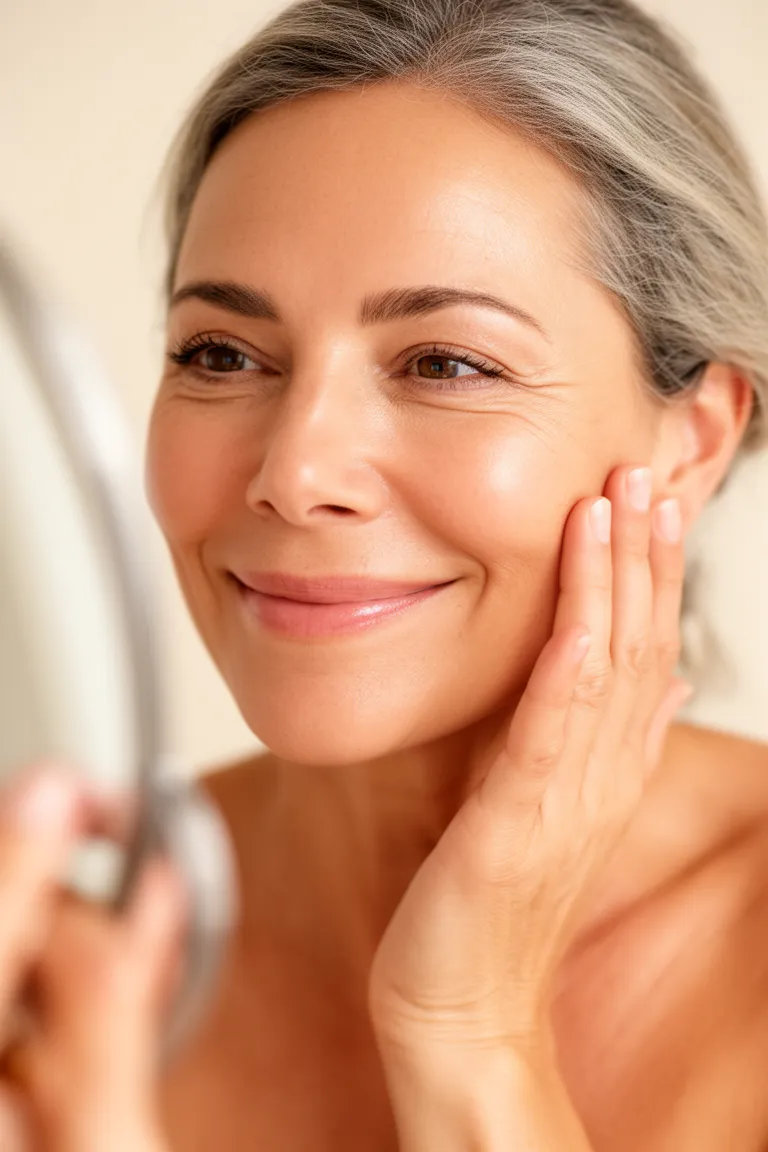
I was in the middle of applying my moisturizer one morning when I saw it. I tilted my head, and the skin along my jawline just… lingered. It didn’t snap back with that familiar, youthful bounce. It was a subtle thing, a half-second of hesitation, but it felt like a betrayal. I’m 47. I’ve been diligent. I eat my leafy greens, drink my water, and I’ve been a religious sunscreen wearer since my late twenties. I even do those face yoga videos sometimes. So when my skin started feeling thinner, less springy, and just different after 40, I was confused. I’d done everything right, hadn’t I?
That moment of recognition sparked a frustrating year. I’d stare at my reflection, gently pinching the skin on my cheek, willing it to behave. I felt like I was failing at something I was supposed to be acing. I invested in expensive firming creams with dazzling promises and added collagen powders to my smoothies, watching my bank account and my hope dwindle in tandem. The changes were so subtle they were almost imaginary, leaving me feeling skeptical and a little foolish for believing the hype. I was the poster child for how to restore skin elasticity after 40 when nothing seems to work.
I was caught in that awful gap between doing all the “good” things and still seeing my body change in ways I didn’t want. It felt profoundly unfair. What I’ve learned since is that restoring skin elasticity after 40 isn’t about finding one miracle product or blaming yourself for a missed spot of sunscreen. It’s about understanding a more complete picture—one that combines realistic sun protection, smart ingredient support, internal nourishment, and, most importantly, a hefty dose of patience.
The Moment I Realized My Skin Elasticity Had Changed After 40
It wasn’t a wrinkle that caught my eye first. It was a texture. My skin, especially around my eyes and neck, started to look and feel like crepe paper—thin, finely lined, and lacking that underlying plumpness. When I smiled, the lines around my eyes stayed etched a bit longer. When I pulled my skin taut, it didn’t rebound with its old vigor. This was different from the dry patches I’d dealt with in winter; no amount of moisturizer could restore that fundamental snap. I began to notice it in photos, too—a slight softening along my jawline that no filter could quite erase. This was my personal, undeniable sign of reduced elasticity versus simple dehydration.
Dehydration makes skin look dull and feel tight, and it often improves quickly with a good hydrating serum. What I was experiencing was structural. The skin felt looser, not just dry. It was less resilient to poking or pulling. I realized that thinner, looser skin can become noticeable in the 40s not because we’ve failed, but because decades of microscopic changes finally become visible to the naked eye. Our collagen and elastin fibers, the scaffolding of our skin, have been quietly slowing their production since our mid-20s. By our 40s, that deficit starts to show up as a literal lack of underlying support.
I had to check my alarmist thoughts. When sudden or uneven changes warrant medical assessment, like deep, rapid sagging on one side of the face, it’s time to see a doctor. For me, it was a symmetrical, gradual shift. It was simply aging. But that realization, while normalizing, didn’t lessen the desire to support my skin with everything I could. It was the beginning of my experience improving skin elasticity after 40—an experience rooted in curiosity, not panic.
Why Sunscreen and a Healthy Lifestyle Still Did Not Tell the Whole Story
This was the heart of my frustration. I was the friend who preached SPF! I ate my salmon and avocados! So why is my skin losing elasticity after 40 despite a healthy lifestyle? My research—and some frank conversations with a dermatologist—helped me see the blind spots. Yes, sunscreen is non-negotiable for preventing further damage, but it can’t erase the cumulative UVA exposure I got in my teens and twenties, before I knew better. That photoaging was already baked into my skin’s history, quietly breaking down collagen year after year.
Then there’s intrinsic aging, our biological clock. Our fibroblasts (the cells that make collagen and elastin) get lazier, and the stuff they do produce is lower quality. On top of that, I learned about the hormonal shifts of perimenopause and menopause. Estrogen is a friend to skin thickness and hydration; as its levels drop, skin can become thinner, drier, and yes, less elastic. My healthy lifestyle was mitigating damage, but it couldn’t halt these natural biological and hormonal processes.
I also discovered the crucial difference between plumping and true elasticity. A good hyaluronic acid serum can plump up skin with water, making it look smoother and firmer temporarily. But true elasticity is about the skin’s ability to return to its original shape, which depends on the strength of the elastin and collagen network. You can have a well-hydrated face that still lacks bounce. This was a lightbulb moment. I was hydrating the surface but not necessarily supporting the structure beneath. It explained why my efforts felt incomplete.
The Firming Creams and Collagen Products I Tried—and What They Could Actually Do
Armed with worry and Google, I went on a spree. I bought the luxury cream that promised to “lift and redefine.” I added a scoop of collagen peptides to my coffee every morning for six months, waiting for a transformation. The results were… underwhelming. The cream provided a nice, temporary tightening sensation (probably from polymers) and good moisture, but by morning, my skin felt the same. The collagen powder? Maybe my nails were a bit stronger. This journey of trying collagen for skin elasticity after 40 and seeing no difference left me feeling skeptical and a bit duped. I was left wondering, why aren't firming creams working for my skin after 40?
What I needed was an education in what ingredients can actually influence skin biology. I learned that topical collagen molecules are too large to penetrate and become new scaffolding—they’re humectants at best. The real heroes work indirectly. Retinoids, for example, signal skin cells to behave more youthfully, speeding up turnover and encouraging new collagen production. They don’t add collagen; they persuade your skin to make more of its own. Peptides are like little messengers that can instruct skin to produce more collagen or calm inflammation. Antioxidants (like Vitamin C) protect existing collagen from free radical damage. As for those collagen supplements, the science is evolving. Some studies show they can improve skin hydration and elasticity by providing the building blocks (amino acids) and possibly sending signals to the dermis. The key is they’re a supportive player, not a solo act. They might help, but they won’t reverse decades of aging on their own. The hard truth I accepted is that no cream or powder can physically replace the lost structural support. They can only create a better environment for your skin to help itself. Functional integrity of aging skin, from cutaneous biology to anti-aging...
The Skin-Elasticity Routine That Finally Felt Realistic
My mistake was looking for a silver bullet. I was slapping on products but ignoring the ecosystem. The first thing I had to fix was my skin barrier. In my zeal to fight aging, I was probably over-cleansing and using actives too aggressively, leading to low-grade irritation that was undermining my collagen. I switched to a gentler approach, focusing on repair with ceramides and fatty acids. A happy barrier is the foundation for everything else—it’s the soil in which you plant your anti-aging seeds.
I also took a harder look at my “healthy” lifestyle. Was I getting enough protein—the literal raw material for collagen? Was my sleep truly restorative? (Hint: Scrolling on my phone at 11 PM didn’t count.) And stress—the silent collagen crusher. My constant low-grade anxiety was likely pumping out cortisol, which breaks down collagen. My skincare routine couldn’t outrun a chaotic life. This was the content gap I never saw in product reviews: the non-negotiable foundation of barrier health, nutrition, sleep, and stress management that makes any topical treatment more effective. It’s the quiet, daily work that never gets a flashy Instagram ad.
I pared everything back and built a routine focused on support, not magic. It’s manageable, sustainable, and built on evidence. This became my best skincare routine to restore skin elasticity after 40 naturally.
Morning: Protection and Preparation My morning is simple. A splash of water or the gentlest cleanser. On damp skin, I sometimes use a Vitamin C serum (an antioxidant to protect), but only if my barrier feels strong. Then a basic moisturizer, followed by my holy grail: a truly broad-spectrum SPF 30 or higher. I apply it to my face, neck, chest, and hands—every single day. This is non-negotiable maintenance to protect the collagen I have and prevent new damage. It’s the single most important step.
Evening: Repair and Communication Nights are for repair. I cleanse gently. Then, I use a retinoid. I started with an over-the-counter retinol twice a week, slowly building tolerance. Patience is key here. When I started using retinol for skin elasticity after 40, I expected miracles in a month. I got irritation instead. I learned to listen to my skin. On the other nights, I might use a peptide serum or just focus on barrier repair with a soothing moisturizer packed with ceramides. I always, always follow any active with a rich, comforting moisturizer to buffer potential irritation and lock in hydration. best way to tighten skin naturally when I already eat healthy and exercise.
The Supporting Cast: Life Beyond the Bottle Beyond the bathroom shelf, I drink water throughout the day (herbal tea counts!), prioritize lean protein and colorful plants at every meal, and have a hard digital curfew to improve sleep. I don’t smoke, and I’m mindful of repetitive facial movements (goodbye, intense squinting!). It’s a whole-life approach. I think of it as building a fortress of health from the inside out and the outside in.
How to Introduce Actives Safely for Sensitive or Menopausal Skin
My skin became more reactive and dry in my 40s, a common companion to hormonal shifts. I learned the hard way that gentle is powerful. You cannot rush this. If you’re new to retinoids, start with a low concentration once a week, literally sandwiched between layers of moisturizer. Watch for signs of irritation—persistent redness, stinging, peeling—and back off if they appear. It’s a marathon. Sometimes, supporting your barrier for a full month before even introducing an active is the fastest path to results, because irritated, inflamed skin can’t heal or build collagen effectively. It’s counterproductive.
Scientific Evidence
Choosing Your Pathway: A Realistic Comparison
One of my biggest stumbling blocks was not knowing what level of effort would yield what kind of result. I swung from doing nothing to doing too much. To help you find your footing, here’s a comparison of different approaches based on my experience and research.
| Approach | Best For | Realistic Timeline for Noticeable Change | Key Consideration |
|---|---|---|---|
| Lifestyle & Sunscreen Only | Maintaining current elasticity, preventing further loss. The essential baseline. | Prevention is ongoing; improvement may be minimal. | Critical for everyone, but won’t rebuild what’s already declined. |
| Lifestyle + Targeted Topicals (e.g., Retinoid, Vitamin C) | Those ready to actively support collagen production and see gradual improvement in texture and firmness. | 3–6 months for texture; 6–12 months for firmness. | Consistency is everything. Start low and slow to avoid barrier damage. |
| Full Holistic Approach (Topicals + Nutrition + Supplements + Lifestyle) | Individuals frustrated by slow progress, wanting to support skin from all angles. | May accelerate or enhance results from topicals alone (e.g., better hydration in weeks). | Most comprehensive, but requires the most discipline and patience. Avoids the “silver bullet” trap. |
| Professional Guidance (Dermatologist + Possible Procedures) | Addressing significant laxity or sagging that topicals can’t reach, after establishing a good base routine. | Varies by treatment; often requires a series and significant recovery time. | An investment in both time and money. Best for specific, persistent concerns after other methods. |
What Improvement After 40 Can Realistically Look Like
I had to radically adjust my expectations. I wasn’t going to look 30 again. The goal became better, not perfect. Realistic improvement after 40 means my skin looks more hydrated, feels smoother to the touch, and has a healthier, more even glow. The fine lines around my eyes are softer, not erased. That crepey texture on my neck is less pronounced. When I gently press my cheek, it rebounds a bit faster. The overall appearance is firmer and more resilient. This is what winning looks like now. It’s subtle enough that no one else might comment, but profound enough that I feel the difference every day. skinception review before and after.
Managing Expectations: The Timeline of Patience Timelines are crucial for managing frustration, and everyone wants to know how long does it take to improve skin elasticity after 40. Hydration can improve in days. Smoother texture and refined pores from retinoids might become apparent in 3-6 months. Noticeable improvements in firmness and elasticity—that tangible “bounce-back”—can take 6 months to a year of unwavering, consistent care. This long game is why so many people give up, thinking nothing is working. You have to trust the process longer than you think.
Knowing When to Seek a Professional Opinion There’s also knowing when to call in the professionals. If, after a solid year of diligent, holistic care, you’re still deeply frustrated by laxity or sagging in specific areas, it’s a perfect time to see a dermatologist. They can discuss stronger options like prescription retinoids (tretinoin) or in-office procedures like radiofrequency microneedling or laser treatments. These can stimulate collagen at a deeper level than topicals alone. I see these as part of the toolbox, not as admissions of failure. They’re for when you want to go beyond what lifestyle and topicals can achieve, and you’re ready for that commitment.
The Mindset Shift That Made All the Difference
Ultimately, the biggest change wasn’t in my skin; it was in my head. I stopped fighting my face and started caring for it. I traded frustration for curiosity, and skepticism for strategic patience. My skin’s journey is now part of my broader story of being 47—a story that includes laughter lines, the wisdom of experience, and the commitment to nurture myself with as much grace as I can muster. The elasticity I’m restoring isn’t just in my skin; it’s in my spirit. It’s the resilience to accept change while actively, lovingly supporting myself through it.
Frequently Asked Questions
Q: How long does it take to actually see results when trying to improve skin elasticity after 40? A: You need to think in seasons, not weeks. While better hydration can make skin look plumper in a few days, true improvements in elasticity—from ingredients like retinoids or consistent peptide use—require at least 3 to 6 months of unwavering routine. Significant firmness and resilience changes are often a 6 to 12 month commitment. Patience isn’t just a virtue here; it’s a requirement.
Q: I’ve heard so much about collagen supplements. Am I wasting my money? A: It’s not a simple yes or no. High-quality collagen supplements (look for hydrolyzed collagen peptides, third-party tested for purity) can provide the amino acids your body uses to build collagen. The best evidence suggests they improve skin hydration and may offer a modest boost in elasticity over time. Think of them as a supportive internal supplement, not a standalone solution. They work best alongside a solid topical routine and good nutrition.
Q: My skin has become so sensitive in my 40s. How can I use strong ingredients like retinol without causing irritation? A: This is incredibly common. The key is the “low and slow” method. Start with the lowest concentration retinol you can find, and use it just once a week. Apply it over the top of your moisturizer (the “sandwich” method) to buffer its effects. Focus intensely on barrier repair with ceramides and soothing ingredients like niacinamide on your off-nights. If your skin stings or turns red, take a break. It’s better to use a gentle retinol consistently than a strong one that wrecks your barrier.
Q: What’s the single most important thing I should be doing that I might be overlooking? A: Beyond daily broad-spectrum sunscreen, it’s protecting your skin barrier. Many of us, in our quest to fight aging, over-cleanse, over-exfoliate, and layer too many actives. A compromised barrier is inflamed, dehydrated, and incapable of healing or building collagen effectively. Prioritize a gentle cleanser, a barrier-repair moisturizer, and patience. A healthy barrier makes every other product you use more effective.
Q: When should I consider professional treatments instead of just relying on skincare? A: Consider a dermatologist consultation if you’ve been consistent with a good routine for a year and are still unhappy with the degree of laxity or sagging. Professional treatments like radiofrequency, ultrasound, or laser therapies can reach deeper layers of skin to stimulate collagen in a way topicals cannot. They are an investment and have downtime, but they can address concerns that are beyond the scope of creams and serums. It’s about choosing the right tool for your specific goals.
📌 Love this guide? Save it on Pinterest!
Pin Restore Skin Elasticity After 40: My Realistic Journey 2026 to your board so you can come back to it later.

