
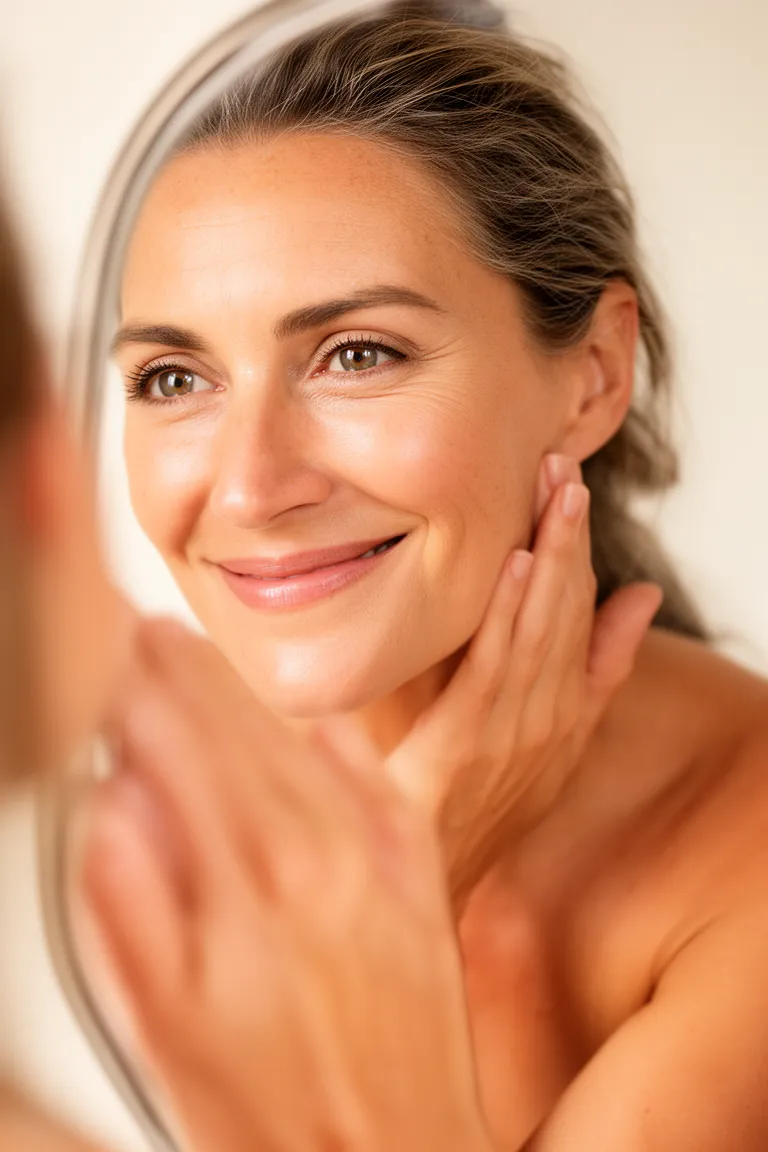
I remember standing in my bathroom, holding a jar of anti-wrinkle cream that cost more than my weekly grocery bill. The packaging was a work of art: sleek, heavy, promising “visibly younger skin in 14 days.” I’d been using it religiously, morning and night, for over a month. I leaned in close to the mirror, tracing the fine lines around my eyes that seemed, if anything, a little more pronounced. A wave of hot frustration washed over me. I did everything right. I wore sunscreen every single day, even in winter. I ate my vegetables, drank my water, and followed a skincare routine for years. Yet, at 42, my reflection was quietly shifting, and this expensive pot of hope felt like just that—a very expensive pot of nothing.
This wasn’t my first disappointment. My vanity was a graveyard of beautiful jars and elegant bottles, each one purchased with a flutter of hope. I’d judge them by their weight, their scent, the luxurious feel on my skin. And each time, the result was the same: a brief period of hydrated, plumper skin that would settle back into its familiar landscape. The wrinkles themselves remained, unmoved by the marketing poetry. I felt skeptical and, frankly, a little foolish. Was my skin just uniquely stubborn? Were these fine lines my inevitable fate?
I almost did accept it. But then I stumbled into a different way of thinking. I stopped listening to the promises on the front of the box and started reading the story on the back—the ingredient list. And that’s when everything changed. I learned to see my skincare through a dermatologist’s lens, swapping hype for evidence, and finally built a simple routine that worked with my skin, not just my hopes.
The Anti-Wrinkle Creams I Bought Because the Packaging Promised Too Much
My journey into wasteful spending started with a seductive vocabulary. Words like “miracle,” “breakthrough,” and “clinical” were catnip to my concerns. I’d see a cream endorsed by a model with impossibly smooth skin and think, “If it works for her, it must be powerful.” I never stopped to ask what “works” actually meant. I bought a cream because it claimed to use “rare alpine edelweiss stem cells,” imagining some potent, magical elixir. Another boasted of “24-karat gold particles” for “luminescent rejuvenation.” The marketing claims were always about measurable skin concerns—wrinkles, firmness, elasticity—but the ingredients were often a mystery, hidden behind proprietary blends with fancy names.
What I didn’t understand then is the crucial difference between cosmetic moisturization and structural change. Many of those luxurious creams were excellent moisturizers. They were packed with emollients and humectants that drew water into my skin’s outer layer. This plumped up my skin beautifully, making fine lines appear shallower for a few hours. My skin felt softer, smoother, and looked more radiant. I’d mistake that temporary, surface-level improvement for real anti-aging progress. The warning signs were there in the vague language: “appears younger,” “looks firmer,” “reduces the appearance.” They were describing an optical effect, not a biological one. Once the hydration evaporated, my skin returned to its baseline, and my frustration would return with it. This cycle of hope and disappointment is exactly why I tried anti wrinkle creams and saw no results—I was treating a symptom (dehydrated skin) but not the cause (lost collagen and sun damage).
What Dermatologist Ingredients Were Actually Missing From My Routine
The turning point came during a lazy Sunday deep-dive into dermatology blogs and science-based skincare articles. I realized my entire strategy was backwards. I was choosing a product first and hoping its ingredients would help. I needed to choose the ingredients first, based on evidence, and then find a product that contained them effectively. My routine was full of supportive players but missing the key evidence-backed actives that directly address photoaging at a cellular level.
The most glaring omission was retinoids. I’d seen “retinol” on labels, but I didn’t grasp its gold-standard status. Retinoids, like prescription tretinoin or its over-the-counter cousin retinol, are the best-supported wrinkle actives we have. They don’t just sit on the surface; they communicate with your skin cells to boost collagen production and accelerate cell turnover. It’s like sending a memo to your skin’s construction crew to get back to work. I also learned about the powerhouse role of vitamin C, specifically L-ascorbic acid in the right concentration and stable formula. It’s a potent antioxidant that helps defend against daily environmental damage and can brighten uneven tone. Then there was niacinamide, a versatile ingredient that strengthens the skin barrier, improves texture, and helps with pigmentation—all without the irritation risk of stronger actives. My expensive creams had often included lovely things like peptides, ceramides, and hyaluronic acid, which are fantastic for hydration and support, but they were rarely paired with these foundational, transformative ingredients. And underpinning it all was my daily sunscreen, which I was already using, but now I understood it wasn’t just a step—it was the most crucial anti-wrinkle prevention tool in my arsenal. This was the core list of dermatologist ingredients in anti wrinkle creams that actually work.
It’s easy to get caught up in the allure of fancy packaging and exotic claims, but understanding what truly impacts skin health is key. If you're curious about other areas of skin improvement, you might find insights into why do I still look old even though I have a skincare routine.
Why a Higher Price Did Not Mean a Better Anti-Aging Formula
This was my hardest pill to swallow. I had equated cost with quality. A $250 cream had to be better than a $50 one, right? My experience proved otherwise, and understanding the “why” was liberating. Price often pays for beautiful packaging, luxurious textures, exotic-sounding extracts, and massive marketing budgets—not necessarily clinical effectiveness. A simpler, less expensive product with a well-formulated, stable concentration of 0.3% retinol could be far more impactful than a cream with a “proprietary retinol complex” at an unknown, likely minuscule, percentage nestled in a jar that degrades the active with every use.
I learned to assess a formula by asking new questions. What’s the concentration of the key active? Is the ingredient form proven and stable? Is the packaging appropriate (airless pumps for vitamin C and retinoids, not jars)? Does the brand disclose percentages or hide behind “a blend of”? A high price doesn’t prove anything about the quality of the formulation, the delivery system, or the skin compatibility. Some of the most disappointing anti wrinkle creams that failed me did so because their star ingredients were either too low in concentration to do anything, unstable and degraded by the time they touched my face, or packaged in a way that rendered them useless. I was paying for the fantasy, not the pharmacology. This realization directly answered my nagging doubt: are expensive anti wrinkle creams worth it or am I wasting money? The answer, I found, is that it depends entirely on the formula, not the price tag.
| Skincare Approach | Best For | Realistic Timeline for Visible Change | Key Consideration |
|---|---|---|---|
| Cosmetic Moisturization Only | Immediate plumping & glow; very dry skin | Hours (temporary) | Does not address structural aging; fine lines return when product wears off. |
| Single Evidence-Based Active (e.g., Retinol) | Beginners, budget-conscious, or sensitive skin types | 3–6 months for fine lines | Patience is key. Start low, go slow to manage irritation. |
| Combined Actives (e.g., Retinol + Vitamin C + Niacinamide) | Those with multiple concerns (lines, tone, texture) and resilient skin | 2–4 months for multi-faceted improvement | Requires careful layering and barrier support to avoid overload. |
| Prescription + Professional Treatments | Persistent, deeper wrinkles or hyperpigmentation unresponsive to OTC care | Varies; can be faster for some concerns | Requires a dermatologist’s guidance, prescription, and often a higher budget. |
The Moment I Realized My Skin Needed Consistency, Not Miracle Cures
After my research, I excitedly bought a basic, affordable retinol serum and a stable vitamin C derivative. I applied them that night, half-expecting to wake up transformed. I didn’t. A week passed. Two weeks. A month. My initial excitement turned back to that old, familiar skepticism. “Here we go again,” I thought. “Another set of products that don’t work.” This was a critical juncture where, in the past, I would have abandoned ship and gone hunting for the next quick fix.
But this time, I knew to check my expectations against reality. I remembered reading that skin cell turnover takes about 28 days, and building new collagen takes months. I wasn’t applying a cosmetic; I was initiating a biological process. I committed to a three-month trial. I focused on consistency, not perfection. Some nights my skin felt dry, so I’d sandwich the retinol between layers of moisturizer. If I experienced irritation, I’d scale back to every other night. I stopped scrutinizing my face every morning and instead took a monthly photo in the same bathroom light. This shift in mindset—from seeking an overnight miracle to nurturing a long-term process—was as important as the ingredients themselves. It was the answer to why isn't my anti wrinkle cream working even though I use it every day—I wasn’t giving the right ingredients enough time to work.
Discovering the right ingredients and being patient can make all the difference. For those looking to improve skin appearance, understanding the why do I still look old even though I have a skincare routine can be a part of this journey.
How Long I Had to Use Effective Ingredients Before Judging Them
Patience, I discovered, is a non-negotiable part of the equation. With my new retinoid, the first four to six weeks were about acclimation. My skin went through a brief period of adjustment—a little dryness, some flaking—which I managed by being gentle and moisturizing diligently. This wasn’t the product “not working”; it was my skin adapting. The initial “glow” and improved texture started to become noticeable around the two-month mark. My skin just looked smoother, more even.
The real changes, the ones I’d spent years chasing, took longer. It was around month four that I was comparing my monthly photos and saw it: the fine lines on my forehead were visibly softer. The crepey texture around my eyes had improved. The improvement was subtle, cumulative, and real. It wasn’t a Photoshop eraser; it was my skin looking healthier, stronger, and better supported from within. This timeline—weeks for texture, months for lines—set me free from the cycle of disappointment. It allowed me to judge products on their true biological timeline, not the marketing one. Anyone wondering how long does it take dermatologist ingredients to reduce fine lines needs to hear this: think in seasons, not weekends.
Scientific Evidence
Why Supporting My Skin Barrier Changed Everything
In my early days of slathering on actives, I ignored the most important system my skin has: its barrier. I’d use a strong product, feel a tingle (mistaking it for “working”), and then wonder why my skin was red, sensitive, and seemed worse. I was attacking my wrinkles without fortifying my skin’s first line of defense. When my barrier was compromised, no active ingredient could work properly, and everything irritated me.
I integrated barrier-supporting ingredients into every step. A gentle, non-stripping cleanser became law. I used a simple moisturizer with ceramides and fatty acids every morning and night, without fail. I learned that niacinamide wasn’t just a brightening agent; it was a barrier superstar that could help my skin tolerate retinoids better. On nights when my skin felt sensitive, I’d skip actives entirely and do a “recovery night” with just a hydrating serum and a rich moisturizer. Building a resilient barrier was the foundation that allowed the effective, evidence-backed actives to do their job without causing collateral damage. It was the missing piece that transformed my routine from a sporadic assault into a sustainable, supportive system. This is especially crucial for women over 40, as our skin’s natural barrier function can become more delicate.
Understanding and supporting your skin barrier is fundamental. For those seeking comprehensive skin improvement, exploring why do I still look old even though I have a skincare routine can offer additional perspective.
The Simpler Routine I Built After Wasting Money on Anti-Wrinkle Creams
My bathroom shelf is now almost comically sparse compared to its former glory. The clutter of hope has been replaced by a handful of purposeful products. My morning routine is swift: a gentle cleanse, a vitamin C serum (I finally found a stable, effective one), a simple moisturizer, and my non-negotiable broad-spectrum SPF 50. That’s it.
My evening routine is where the active work happens, but it’s still simple. I double cleanse to remove sunscreen, apply my retinoid (I worked up to using it 3-4 nights a week), lock it in with the same reliable moisturizer, and that’s it. One or two nights a week are “active-free” where I might use a peptide serum or just focus on barrier repair. The biggest lesson was learning to choose one primary active to focus on—for me, that’s retinoids—and build a stable, consistent routine around it. I no longer chase ten different solutions for ten different problems. I support my skin’s health fundamentally, and the improvements in tone, texture, and lines have followed. I switched to a dermatologist ingredient skincare routine and what changed was not just my skin, but my entire mindset: from confused consumer to informed caretaker.
What To Do When You’ve Tried Everything and Still See No Results
Even with this new approach, I hit plateaus. Some lines, particularly deeper-set ones, didn’t budge. This is where my journey taught me the limits of topical skincare and the importance of professional guidance. If you’ve been consistently using well-formulated dermatologist ingredients for six months to a year and have hit a wall, or if you experience persistent irritation, it’s time to consult a dermatologist.
A professional can assess if you might benefit from a prescription-strength retinoid like tretinoin, which is more potent than anything over-the-counter. They can also discuss in-office procedures—like chemical peels, laser treatments, or neuromodulators (e.g., Botox)—that address wrinkles through different mechanisms. These aren’t failures of your routine; they’re logical next steps for concerns that topical creams can’t reach. Seeing a derm wasn’t admitting defeat; it was taking empowered, informed control of the next phase of my skin health, moving beyond the aisles of the department store and into personalized care. It’s the final, crucial step after you’ve learned to decode the ingredient list.
For those seeking to understand the science behind skin treatments, this study on Anti-wrinkle efficacy of standardized phenolic acids polymer extract (PAPE) from... offers a glimpse into ingredient research.
When you've exhausted topical options, professional advice is invaluable. It's a step beyond consumer products, much like considering why do I still look old even though I have a skincare routine or exploring options like best stretch mark removal cream that works.
Frequently Asked Questions
Q: How long does it take to see real results from dermatologist ingredients like retinol? A: You need to reset your expectations from “days” to “months.” For texture and radiance, you might see improvements in 4-8 weeks. For visible reduction in fine lines, consistent use for 3-6 months is a more realistic timeline. Building collagen is a slow process, so patience and consistency are key.
Q: I tried a retinol serum and my skin got red and flaky. Does that mean it’s not for me? A: Not necessarily! Initial irritation is common as your skin adapts. This is often called “retinization.” The key is to start slowly (1-2 nights a week), use a pea-sized amount for the whole face, and “sandwich” it by applying moisturizer first, then retinol, then more moisturizer. If irritation is severe, scale back. A gentler form, like retinaldehyde or a lower concentration, might be a better starting point.
Q: Are expensive anti-wrinkle creams ever worth it, or is it all a waste of money? A: Price is not a reliable indicator of effectiveness. A high cost often covers fragrance, packaging, and marketing. What matters is the formulation: the type and concentration of the active ingredient, its stability, and the delivery system. You can find exceptionally well-formulated products at mid-range prices and sometimes overpay for beautifully packaged, ineffective ones. Always judge by the ingredient list and evidence, not the price tag.
Q: What should I look for in an anti-wrinkle product if I want to avoid wasting money again? A: First, identify your primary concern (fine lines, texture, pigmentation) and look for the evidence-backed active that addresses it (e.g., retinoids for lines). Then, look for a product that states the concentration of that active, comes in stable packaging (like an opaque, airless pump for vitamin C or retinol), and has positive reviews focused on results, not just texture or scent. Prioritize a simple formula with a proven active over a complex “miracle blend.”
Q: Can I use vitamin C and retinol together? A: It’s generally recommended to separate them to maximize efficacy and minimize potential irritation. A common and effective approach is to use vitamin C in your morning routine (where it can act as an antioxidant shield) and retinol in your evening routine (when it can work on repair without sun exposure). If your skin is resilient, some people tolerate using them together at night, but introducing them separately is the safer, more standard advice.
Q: How do I choose between retinol, peptides, and vitamin C? I’m overwhelmed. A: Think of them as specialists on a team. If fine lines and texture are your main concern, make a retinoid your “star player.” Vitamin C is your daily “defender” against environmental damage. Peptides are great “supporting players” for hydration and signaling skin repair. You don’t need all three at once. Start with one, like a retinoid, and once your skin is comfortable and consistent, you can consider adding vitamin C in the AM. Keep it simple.
📌 Love this guide? Save it on Pinterest!
Pin Ditch Expensive Creams: Dermatologist Ingredients That Actually Work in 2026 to your board so you can come back to it later.

