
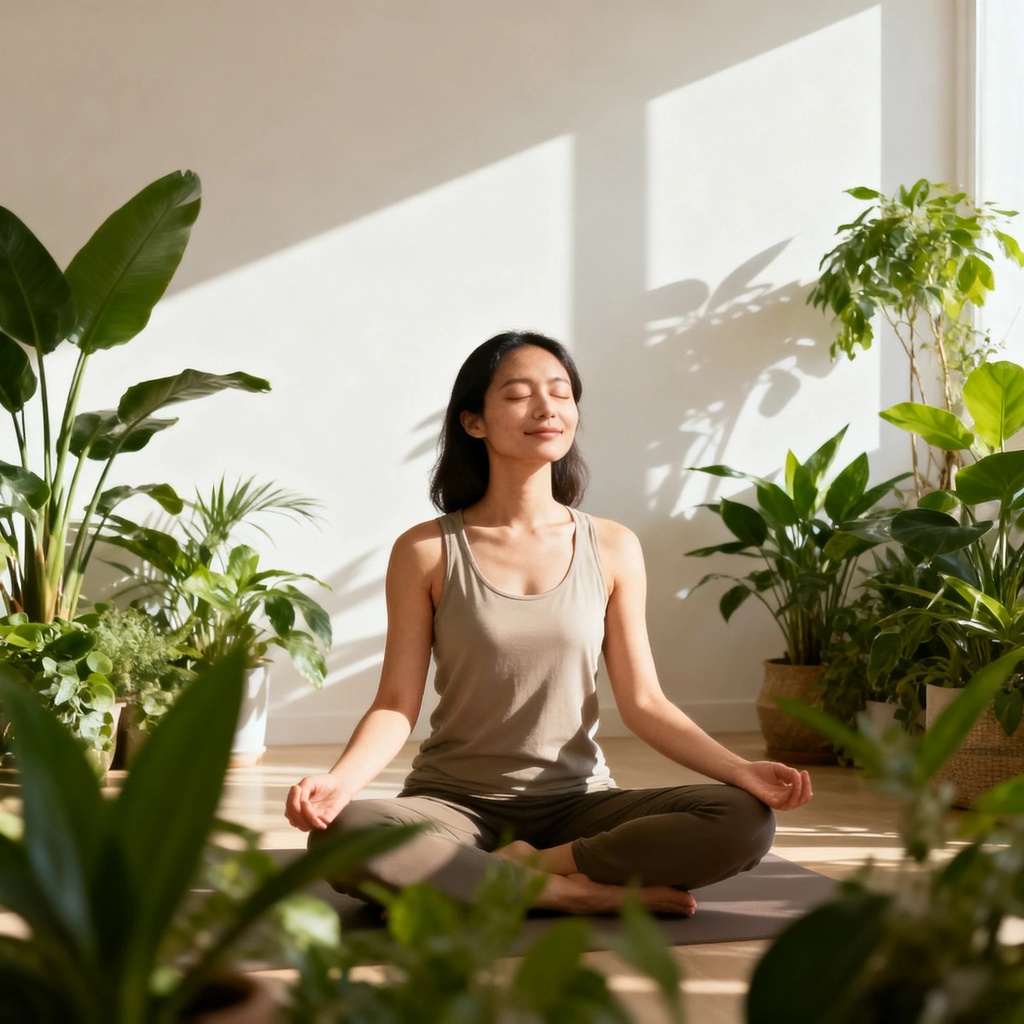
My alarm went off at 5:30 AM, same as always. I’d roll out of bed, drink my lemon water, and meditate for twenty minutes before my morning HIIT workout. My breakfast was a meticulously crafted smoothie bowl, my lunch a rainbow salad from my weekly meal prep, and my evening was capped with a gratitude journal entry. By all the metrics—Instagram’s, my wellness app’s, the latest podcast’s—I was winning. I was the picture of health. So why did I sit in my car after work, too drained to even go inside, feeling a hollow ache that no green juice could ever fill?
I remember scrolling through my camera roll, looking at pictures of myself at a wellness retreat, doing yoga on a mountain at sunrise. My smile was perfect, but my eyes looked vacant. I had followed the script to a T. I did everything right for my health, ticking off every box on the “perfect life” checklist. Yet, there I was, a 34-year-old professional with a six-figure salary and abs, feeling profoundly, inexplicably empty. It was like living in a beautifully designed, spotlessly clean, and utterly silent house. The loneliness was deafening.
The breaking point came during a silent meditation session I’d paid hundreds for. As I sat there, supposedly connecting with my inner peace, all I could feel was a simmering panic. Is this it? I thought. Is wellness just this… endless maintenance of a body, while the person inside it feels completely disconnected? I had tried every detox, every retreat, every trend, but nothing gave me the deep sense of peace I craved. That moment of quiet despair was the beginning of everything changing. I was finally asking the real question: why am I still tired even though I eat healthy and do all the right things?
Why Doing Everything Right Still Leaves You Empty
I thought my emptiness was a personal failure. If the kale and the kettlebells weren’t fixing it, I must need more kale, heavier kettlebells. I was trapped in a cycle of adding more to my wellness checklist, believing fulfillment was just one more perfect habit away. But the real shift started when I realized my approach was backwards. I was treating wellness like a project to be managed, not a life to be lived. My focus was entirely external: the right foods, the right movements, the right routines. I had become a curator of habits, not an inhabitant of my own body and mind.
Reclaim your wellness, rediscover your joy.
 👉 Explore Natural Solutions
Find a path to well-being that resonates with your soul, not just your schedule.
The gap wasn’t in my effort; it was in my intention. I was chasing a state of “perfect health” as defined by external trends, not by my own internal needs. My workouts were for punishment and aesthetics, not for joy or strength. My meals were for optimization, not for nourishment or pleasure. My meditation was a task to reduce stress, not a practice to cultivate presence. I had mastered the how but had completely lost sight of the why. This is the core reason why so many of us feel that even with perfect habits, we’re still running on empty. We’ve conflated discipline with fulfillment, and they are not the same thing.
I do everything right for my health but still feel empty because I was following a map that led to a destination called "Approval," not a place called "Home."
The Hidden Cost of Wellness Perfectionism
What nobody talks about is how the pursuit of perfect health can become its own source of anxiety. Every skipped workout, every “unclean” meal, every night of less-than-ideal sleep wasn’t just a slip-up; it was a moral failing. My identity had become entangled with being “the healthy one.” This wellness perfectionism was a silent, grinding pressure. It meant I couldn’t enjoy a slice of cake at a friend’s birthday without a side of guilt. It meant a rest day felt like laziness, not recovery. I was living in a state of constant, low-grade fear that I would fall from grace.
This constant self-surveillance is exhausting. It leaves no room for spontaneity, for listening to your body’s actual cues, or for the messy, beautiful reality of being human. I was so busy tracking macros and monitoring my sleep score that I stopped asking myself simple, vital questions: Am I enjoying this? Do I feel connected? What do I actually need right now? The pressure to be perfectly healthy had built a wall between me and the very vitality I was trying to cultivate. It’s a brutal irony: my quest to eliminate burnout had become the primary fuel for it. I began to wonder, does wellness perfectionism cause burnout? In my experience, it absolutely does. It turns self-care into a high-stakes performance where you’re both the star and the harsh critic.
Perhaps a subtle shift in perspective is all that's needed. There are ways to find balance and renewed energy.
The Moment I Realized I Was Following the Wrong Map
My “aha” moment didn’t happen on a meditation cushion or in a gym. It happened on a random Tuesday when I was sick with a cold. Forced to rest, I lay on the couch and scrolled through old photos. I saw a picture of myself from years ago, laughing with friends over a messy, cheesy pizza. I looked genuinely happy. I realized I couldn’t remember the last time I’d felt that kind of unselfconscious joy. My current life was a museum of good habits, but it felt sterile.
That’s when it hit me: I had been trying to fix a problem of the spirit with tools for the body. My healthy habits didn’t make me happy because they weren’t designed to. They were designed to make me healthy, by a very narrow definition. The deep sense of peace I craved wasn’t going to come from another supplement or a longer plank hold. It was going to come from connection—to myself, to others, and to a sense of purpose that existed outside of my own optimization. I had to find how to find meaning in my wellness journey, or it would forever feel like a hollow performance. I saw clearly that I tried every detox and retreat but nothing helped because I was looking for answers in all the wrong places.
Nourish your body, nurture your spirit.
👉 Explore Natural Solutions
Embrace a holistic approach to wellness for lasting vitality and inner peace.
How to Redefine Wellness on Your Own Terms
So, I started an experiment. For one month, I would make choices based on one question: “Does this feel nourishing?” Not optimal, not correct, not impressive. Nourishing. Sometimes, the answer was a sweaty run. Other times, it was a slow walk listening to a podcast. Sometimes it was a salad. Often, it was the pasta my Nonna used to make, eaten slowly at my kitchen table with my phone away. I gave myself permission to redefine wellness not as a checklist, but as a daily practice of tuning in.
I began to align my choices with my core values, not trending hashtags. I value connection, so I replaced a solo Friday night foam-rolling session with calling a long-distance friend. I value creativity, so I sometimes spent my morning meditation time doodling instead. I stopped seeing my body as a machine to be tuned and started relating to it as a partner in my life. This shift from external rules to internal guidance was terrifying at first—where were the metrics?—but it was the first time in years I felt a flicker of real, unmanufactured peace. This is the essence of learning how to align wellness with my values instead of trends. It’s a quiet rebellion against the noise.
If you're also experiencing focus issues, it might be worth exploring why can’t I focus anymore male.
Finding Your Personal Wellness Compass
This process isn’t about throwing out all your routines. It’s about infusing them with your meaning. I broke it down into three steps that finally made it stick:
- Identify Your Core Feelings: What do you want to feel more of? For me, it was "connected," "creative," and "at ease." Not "ripped" or "disciplined."
- Audit One Habit: Pick one thing you do routinely, like your workout. Ask: Does this make me feel the way you want to feel? If my workout felt isolating and punishing, it wasn't serving my value of connection.
- Tweak, Don't Overhaul: Instead of quitting the gym, I invited a friend once a week. Small alignment, big shift in feeling.
| Approach to Wellness | Best For | Realistic Timeline for Shift | Key Consideration |
|---|---|---|---|
| The Perfectionist Checklist | Those who thrive on structure and clear rules | Initial "high" fades quickly | High risk of burnout, anxiety, and feeling empty despite effort |
| Values-Based Alignment | People feeling disconnected from their routines, seeking meaning | 4-8 weeks to feel a sustained difference | Requires introspection and patience; feels messy at first |
| Intuitive & Gentle Integration | Anyone recovering from burnout or extreme diet/exercise regimes | 8-12 weeks to rebuild trust with your body | Progress is non-linear; focuses on healing the relationship with self-care |
| Holistic Lifestyle Redesign | Those ready to examine work, relationships, and environment alongside habits | 6+ months for foundational change | A deep, slow process that addresses root causes, not just symptoms |
Sometimes, additional support can help you achieve your goals. It's important to remember that everyone's journey is unique.
Realistic Expectations for Emotional Healing
One of the biggest myths sold to us is that if you just do X, Y, and Z, you’ll achieve a state of perpetual calm and happiness. My journey from burnout to something resembling balance was anything but linear. There were days I fell back into old patterns, berating myself for a “bad” food choice or skipping a workout. The old voice of wellness perfectionism would pipe up, telling me I’d failed. I’d think, am I wasting money on wellness products that don't work on my soul?
For some, addressing underlying hormonal imbalances might be beneficial; consider exploring signs of low testosterone in men over 45 belly fat low energy low sex drive.
Scientific Evidence
Learning to have realistic expectations for emotional healing was crucial. Some days, the nourishing choice was to cry in the shower. Other days, it was to tackle a work project I’d been avoiding. Healing isn’t about ascending to a stress-free plateau; it’s about building a more compassionate and resilient relationship with yourself through all of life’s ups and downs. It’s about noticing the guilt, the anxiety, the emptiness, and meeting it with curiosity instead of another punishing protocol. Normalizing this non-linear process made me feel less broken and more human. The timeline? For me, the sharp edge of guilt started to soften after about six weeks of consistent, kind questioning. The deep, sturdy feeling of inner peace took closer to six months of practice.
Integrating Wellness Into a Chaotic Life
You don’t need a retreat to start. The real work happens in the mundane moments of your existing life. Integrating wellness into a chaotic life looked like small, sustainable shifts. It was choosing to take five deep breaths before answering a stressful email instead of trying to carve out 30 minutes I didn’t have. It was keeping nuts in my desk drawer so I could listen to my hunger instead of powering through to a “scheduled” meal time. It was sometimes using my lunch break to sit in the park and feel the sun on my face, instead of hitting the gym.
It's also worth noting that proper nutrition is crucial, especially after significant body changes; Nutritional Challenges in Post-Massive Weight Loss Body Contouring: Guidance for... highlights the importance of addressing nutritional needs.
I stopped seeing my daily routine as a rigid structure to maintain and started seeing it as a flexible framework to support my well-being. The goal was no longer perfection; it was presence. Was I fully in this conversation? Was I tasting this food? Was I feeling the strength in my body as I moved? This integration made wellness feel less like a separate, time-consuming project and more like the texture of my life itself. It answered the question of how to heal emotionally when you're already physically healthy—by weaving emotional care into the physical acts you’re already doing.
Some individuals explore additional support for their wellness journey, such as Cjc 1295, but it's essential to consult with a healthcare professional.
The Quiet Liberation of Letting Go
The hardest, most liberating part was letting go of the "healthy" identity. I had to mourn the version of me that was admired for her discipline. I started to say things out loud that felt scandalous: "I'm not working out today, I'm tired." Or, "I'm having the bread." Each time I did, I braced for judgment, but it never came from anyone but me. Slowly, I was dismantling the prison I’d built.
This stage is where you truly learn how to stop feeling guilty about not being perfectly healthy. It’s a practice of self-advocacy. It meant skipping a workout to help a friend move, and realizing my value wasn’t diminished. It meant eating airport food without a side of self-loathing. Letting go wasn’t about becoming unhealthy; it was about expanding my definition of health to include mental freedom, joy, and connection. It was about becoming a person who happens to care for herself, not a "wellness person" as a full-time identity.
What Fulfillment Actually Feels Like (Spoiler: It’s Messy)
The deep sense of peace I was searching for didn’t arrive with a bang. It trickled in through the cracks I’d made in my own rigid perfectionism. It feels less like constant bliss and more like a sturdy inner floor. I still have stressful days. I still get anxious. Is it normal to feel anxious even though I exercise daily? Yes, completely. The difference is, I no longer see those states as enemies to be eradicated with a green juice, but as signals to be listened to.
Fulfillment now feels like the quiet satisfaction after a meal shared with loved ones. It feels like the tiredness after a hike taken for the view, not for the calorie burn. It feels like the ability to sit with sadness without immediately trying to “fix” it. My wellness journey is no longer empty because I finally showed up as the main character in it. I’m not following a map drawn by someone else; I’m learning to navigate by my own internal compass. How to redefine wellness when you're burned out starts right there: by asking your weary self what it needs, and believing the quiet answer that comes back. That has made all the difference.
Frequently Asked Questions

A: It’s a process, not a switch you flip. For me, the intense, sharp guilt began to fade after about two months of consciously choosing kindness. Every time the guilt popped up, I’d pause and ask, “What would I say to my best friend right now?” Slowly, over 6-8 months, the compassionate voice became my default. Be patient; you’re unlearning years of conditioning that tied your worth to your performance.
Q: Is it normal to feel anxious even though I exercise daily?A: Absolutely. Exercise is a powerful tool for managing anxiety, but it’s not a cure-all. Anxiety often has emotional, psychological, or situational roots that physical activity alone can’t address. If you’re exercising from a place of punishment, rigid control, or to “burn off” anxiety, it might even contribute to the stress cycle. It’s a sign to look at the why and how behind your workout—is it fostering ease or adding more pressure?
Q: How do I know if I’m aligning wellness with my values instead of trends?A: Start by identifying 2-3 of your core values (e.g., connection, creativity, peace, adventure). Then, for a week, audit your wellness choices. Does your 90-minute solo gym session align with a value of connection, or would a 45-minute workout followed by coffee with a friend be more aligned? Does your restrictive diet align with peace, or does it create anxiety around social events? The choices that leave you feeling genuinely energized, whole, and connected to yourself are the ones aligned with your values.
Q: I’ve tried every detox and retreat but nothing helped. Am I broken?A: No, you are not broken. This was my biggest fear, too. It likely means you’ve been treating symptoms (with detoxes) or seeking temporary escapes (with retreats) instead of addressing the core issue: the disconnect between your daily life and what truly nourishes you on a soul level. The answer isn’t another external, intensive fix; it’s the slower, internal shift of learning to listen to and trust yourself in your ordinary life.
Q: How do I start redefining wellness without getting overwhelmed?A: Pick one tiny, almost silly thing. For one meal this week, eat exactly what you crave, with full attention and zero guilt. Or, for one workout, move in a way that feels genuinely fun—dance, swim, play—with no tracking. Start microscopically. The goal isn’t to overhaul your life overnight, but to collect small pieces of evidence that prove your own feelings and preferences are valid and trustworthy guides. One small proof is all you need to begin.
📌 Love this guide? Save it on Pinterest!
Pin Empty Wellness Journey? Find True Fulfillment in 2026 by Redefining Health to your board so you can come back to it later.

