
If you are a woman over 40 who has meticulously adopted a gentle skincare routine, only to be met with unrelenting facial redness, visible blood vessels, or gritty, irritated eyes, your frustration is both valid and widely shared. Clinical insights are increasingly pointing to a critical oversight in general advice: rosacea is not a single condition but a spectrum of distinct types. For women in midlife, the universal mantra to "avoid triggers and be gentle" is often insufficient because it ignores the specific biological mechanisms of your particular rosacea subtype. These mechanisms are frequently amplified by the hormonal shifts and chronic stress unique to this life stage. This gap between generic advice and personalized reality leaves many feeling confused and betrayed by routines that seem logically sound, highlighting a pressing need for clarity that addresses the root causes, not just the symptoms.
The Invisible Failure: Why Gentle Skincare Falls Short
Gentle skincare creates a protective foundation but does not rectify the underlying vascular instability or inflammatory dysfunction central to rosacea. This reality breeds a particular disillusionment for women in their 40s and 50s: you have eliminated common culprits like alcohol, spicy foods, and abrasive exfoliants, and you faithfully use mild cleansers and barrier-supporting moisturizers, yet your complexion remains persistently flushed or your eyes feel perpetually sandy. This "invisible failure" is most pronounced in Erythematotelangiectatic rosacea, marked by persistent redness and visible vessels, and Ocular rosacea. While a gentle routine fortifies the skin barrier and prevents additional insult, it does not directly calm the overactive immune response or stabilize the dilated blood vessels that are the true sources of your eye irritation despite avoiding sun and spicy food. It’s a crucial first step, but when used in isolation, it’s like locking your doors while the house is already on fire.
Understanding the Four Primary Rosacea Types
To navigate beyond frustration, you must first identify which type of rosacea you are managing. Clinical guidelines outline four primary presentations, though they can and often do overlap.
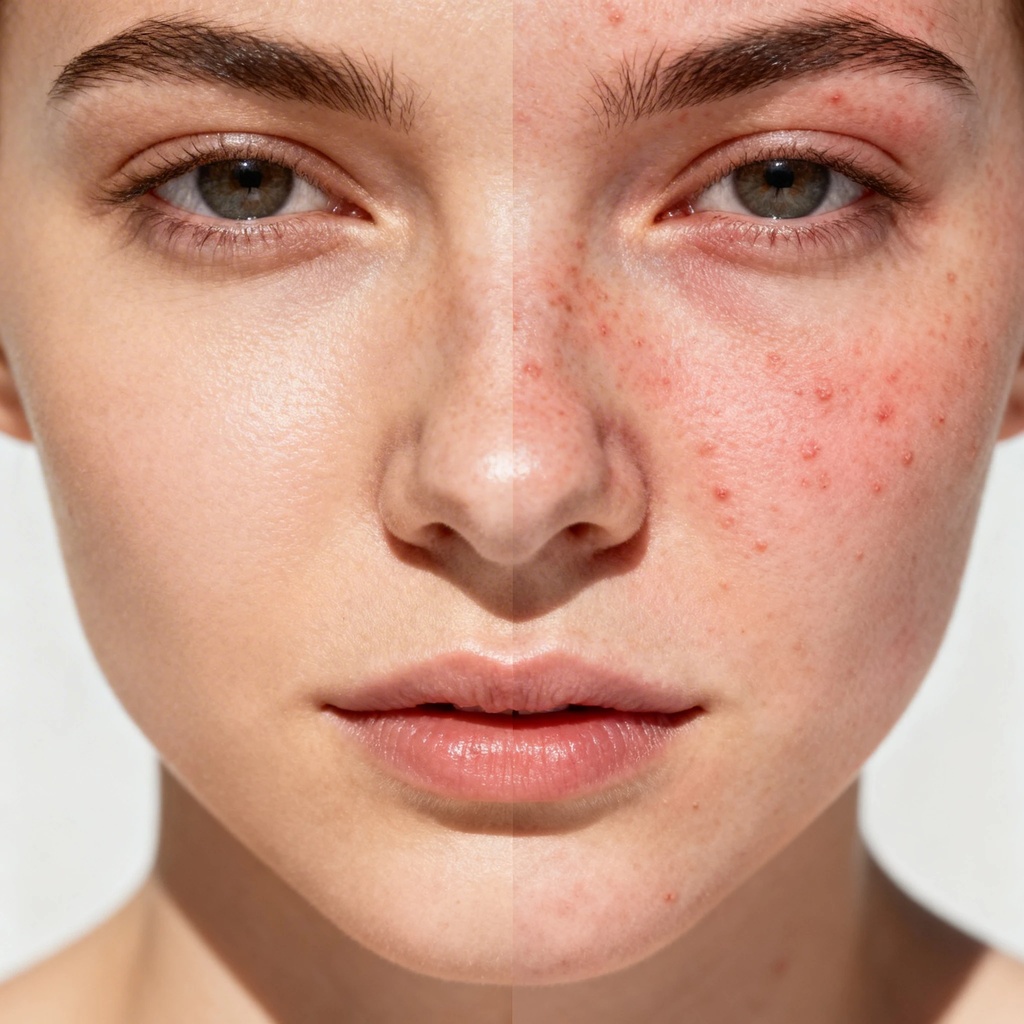
Erythematotelangiectatic Rosacea (Type 1): This is the hallmark "redness and flushing" type. It involves persistent facial redness (erythema), frequent episodes of flushing or blushing that last longer than normal, and often visible, thread-like blood vessels (telangiectasia) on the cheeks, nose, and chin. The skin may feel sensitive, with sensations of burning, stinging, or tightness. Papulopustular Rosacea (Type 2): Frequently confused with adult acne, this type features central facial redness accompanied by red bumps (papules) and pus-filled blemishes (pustules). It shares the burning and stinging of Type 1 but is distinguished by these acne-like lesions, which typically do not contain blackheads. Phymatous Rosacea (Type 3): This less common type involves a thickening of the skin and enlargement of facial features due to tissue overgrowth. It most often affects the nose (rhinophyma), leading to a bulbous, irregular texture, but can also involve the chin, forehead, or ears. Ocular Rosacea: This type targets the eyes, causing symptoms like a persistent gritty or sandy feeling, burning, stinging, dryness, light sensitivity, redness, and swollen eyelids. It can occur independently of skin symptoms, which is why it is so often missed by those focusing solely on facial care.Biological Mechanism: Immune Response vs Facial Triggers
The persistence of symptoms despite your best efforts is not a personal failing but a biological mismatch. At its core, rosacea involves an overactive innate immune system in the skin. This system may release excessive amounts of protective peptides like cathelicidin, which inadvertently trigger inflammation and cause blood vessels to dilate, leading to redness. Compounding this is an abnormal reaction to Demodex mites, microscopic organisms that reside on human skin. In rosacea-prone skin, both the density of these mites and the skin's inflammatory response to them or their bacteria can be heightened. This creates a latent inflammatory "tinderbox." Everyday triggers—a warm drink, emotional stress, a change in temperature—then act as the spark. Your gentle skincare routine, while vital for barrier health, does not reset this hyper-vigilant immune system or dismantle this tinderbox, which is why flares continue to break through.
It's important to understand the underlying factors that contribute to these skin issues. You might also find that some Pre Workout Gummies can impact your skin health.
Calm your skin, calm your life.
 👉 Explore Natural Solutions
Find relief from rosacea flares with a personalized approach.
The Role of Demodex Mites and Immune Friction
Research suggests that the relationship between Demodex mites and the skin's immune defense is a key player, especially in inflammatory types. The immune system's overreaction to these normally benign residents creates a cycle of inflammation that gentle cleansers cannot wash away. This mechanism is particularly relevant for understanding why bumps and pustules (Type 2) may appear without traditional "acne" causes.
Hormonal Influence on Immune and Vascular Reactivity
Hormones, particularly estrogen, play a significant modulatory role in immune function and vascular tone. As estrogen levels fluctuate and decline during perimenopause, this can directly influence the skin's inflammatory responses and the stability of facial blood vessels, making them more prone to dilation and less responsive to simple calming measures.
Life Context Deep-Dive: How Midlife Stress Sabotages Control
The biology of rosacea collides powerfully with the lived experience of women over 40. This period is often defined by the hormonal rollercoaster of perimenopause and menopause. Estrogen's decline can directly exacerbate vascular reactivity, making flushing more severe and persistent, while also subtly impairing skin barrier function. Concurrently, this life stage is frequently packed with peak career demands, caring for teenage children or aging parents, and financial pressures—all sources of chronic stress that elevate cortisol. This hormone, in turn, promotes systemic inflammation and can further compromise the skin's barrier integrity. This "hormone-stress axis" is a critical, yet routinely overlooked, engine driving why rosacea that was once manageable can seem to spiral out of control, creating a specific demand for a rosacea types protocol for perimenopausal women that acknowledges these dual pressures.
It's worth exploring how lifestyle adjustments can affect your skin and overall well-being. Let's consider some options for managing skin health.
Scientific Evidence
Why Common Protocols Stop Working
Many initial treatment plans, particularly for papulopustular rosacea, involve topical or oral antibiotics for their anti-inflammatory properties. Over time, their efficacy may diminish, or they may prove inadequate for the persistent background redness and visible vessels of Type 1 rosacea. Furthermore, the skin itself evolves. After 40, natural collagen depletion and cumulative sun exposure can make blood vessels more fragile and permanently dilated. A regimen that subdued occasional flushing in your 30s may be powerless against the more entrenched vascular and inflammatory landscape of your 40s and 50s. This disconnect explains the experience of sudden rosacea flares after 40 with normal skin routine—the "normal" routine is no longer matched to the new biological and life-stage reality of your skin.
The Critical Mismatch: Treating the Wrong Type
A profound source of confusion and stalled progress is applying solutions designed for one rosacea type to the symptoms of another. For example, diligently using anti-inflammatory creams meant for papulopustular rosacea will have minimal impact on the fixed redness and visible vessels of erythematotelangiectatic rosacea. Conversely, focusing all energy on facial redness while ignoring gritty, dry eyes means completely missing a diagnosis of ocular rosacea. This mismatch is at the heart of countless online forum posts from women who are confused about my rosacea type no good answers online. They are following advice, but it is advice for a different problem. Accurate identification of your primary subtype is the essential first step toward effective management. A study in the Journal of the American Academy of Dermatology highlights the importance of accurate classification and treatment strategies for rosacea: Rosacea: New Concepts in Classification and Treatment.
| Approach | Best For | Timeline for Noticeable Change | Key Consideration |
|---|---|---|---|
| Lifestyle & Gentle Skincare Only | Mild, occasional flushing; initial management for all types as a foundation. | Can reduce flare frequency within weeks, but unlikely to resolve persistent redness or bumps. | Forms a crucial base but is often insufficient alone for moderate to severe or persistent symptoms of a specific type. |
| Topical Prescription Treatments | Papulopustular (Type 2) rosacea; some anti-redness agents for Type 1. | 4 to 12 weeks for reduction in bumps and inflammation; redness may take longer. | Requires consistent use; efficacy can plateau or wane over time, necessitating medical review. |
| Procedural Interventions (e.g., Laser/IPL) | Erythematotelangiectatic (Type 1) rosacea with visible blood vessels; some phymatous changes. | Results visible after 1-3 treatment sessions, typically spaced 4-6 weeks apart. | Targets vascular component directly; requires investment and must be performed by an experienced professional. |
| Integrated Type-Specific Plan | Anyone, especially midlife women, for whom single-approach plans have failed; involves combining the above strategically. | Multi-faceted: barrier improvement in weeks, prescription results in months, procedural results after sessions. | Most effective but requires accurate diagnosis, professional guidance, and patience as different elements work on different timelines. |
The Integrated Path Forward: Adapting Rosacea Management to Midlife
Sustainable control requires a dual strategy: type-specific medical interventions guided by a dermatologist, paired with a lifestyle plan adapted to your midlife context. For Erythematotelangiectatic rosacea, gentle skincare must be complemented with vascular laser or intense pulsed light (IPL) treatments to target the dilated blood vessels that topicals cannot reach. For Papulopustular types, a dermatologist may prescribe a rotating schedule of anti-inflammatory agents to maintain efficacy. For Ocular rosacea, daily eyelid hygiene with warm compresses and preservative-free lubricants is non-negotiable. Crucially, your personal trigger diary must now expand to track hormonal cycles and stress patterns. Management evolves from seeking a perfect, static solution to practicing strategic adaptation—understanding that a high-stress month may require stricter trigger avoidance, or that investing in a laser treatment may be necessary for symptoms unresponsive to creams.
Consider exploring options that support your skin's resilience. You might also want to learn more about how hgh booster can impact your overall health.
Building a Resilient, Type-Aware Routine
Your new routine should rest on three pillars: prevention, precision, and patience. Prevention means maintaining that non-negotiable gentle skincare base and diligently avoiding your personalized triggers. Precision involves using the right medical tool—be it a prescription cream, an oral medication, or a laser—for your confirmed rosacea subtype. Patience is essential; skin turnover and vascular remodeling take time. Results from new prescriptions may take 8-12 weeks, while the full benefits of lifestyle adjustments accrue over months. This integrated, type-aware approach is specifically beneficial for women over 40, as it respects the complexity of both changing skin biology and multifaceted lives, finally addressing the core question of why is my face always red over 40 even with gentle skincare. You may also want to look into how man boobs can be reduced through lifestyle changes.
Frequently Asked Questions
A: Gentle skincare is vital for maintaining a healthy skin barrier and preventing further irritation, but it does not treat the underlying causes of rosacea redness. Persistent redness, especially from Erythematotelangiectatic rosacea, involves dilated blood vessels and an overactive inflammatory response in the skin. These often require targeted treatments, such as prescription topicals designed to constrict vessels or reduce inflammation, or in-office procedures like laser therapy, to see significant improvement.
Q: How long does it take to see results from a new, type-specific rosacea plan?A: Timelines vary significantly depending on the treatments involved. Prescription topicals for bumps and inflammation typically require 4 to 8 weeks of consistent use to show clear improvement. Lifestyle modifications to avoid triggers can reduce flare frequency within a few weeks. Calming persistent background redness often takes longer, potentially several months. Procedures like laser for visible vessels may show results after just one session, with optimal results following a series of treatments spaced several weeks apart. An integrated plan works on multiple timelines simultaneously.
Q: Is laser treatment for visible blood vessels safe for mature skin?A: When performed by an experienced, qualified dermatologist or licensed practitioner, vascular laser and IPL treatments are generally considered safe for mature skin. The practitioner will carefully select the appropriate device and adjust its settings for your specific skin type, tone, and condition. A thorough consultation is essential to assess your suitability, discuss any potential risks (like temporary swelling or pigment changes), and establish a strict post-treatment care plan that always includes vigilant sun protection.
Q: Who is most likely to benefit from this type-specific approach?A: This approach is particularly valuable for women over 40 who have found that generic "gentle skincare and avoid triggers" advice is no longer sufficient. It is ideal for those struggling with persistent background redness and flushing (Type 1), inflammatory bumps (Type 2), or irritating eye symptoms (Ocular rosacea) that have not responded adequately to over-the-counter methods. It is also crucial for anyone who feels uncertain about their subtype or why their current routine is failing.
Q: What’s the biggest mistake people make when managing rosacea later in life?A: The most common mistake is failing to obtain a precise diagnosis of their rosacea subtype from a dermatologist and continuing with a one-size-fits-all approach. Treating all redness as the same, or overlooking ocular symptoms entirely, leads to ineffective and frustrating routines. The second major mistake is not adapting management strategies to account for powerful midlife catalysts like hormonal fluctuations and chronic stress, which can become primary drivers of flares during this life stage.
📌 Love this guide? Save it on Pinterest!
Pin Rosacea Types in Women 40+ Explained: Clear Skin Guide 2026 to your board so you can come back to it later.

